
If you don't believe policies have consequences, take a close look at the latest IRS migration data.
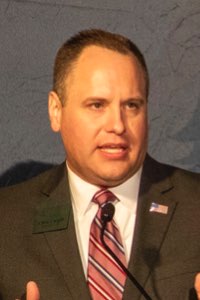 Chris Cargill
Washington state's population is stagnant, and it has lost $185 million in adjusted gross income (AGI). Idaho's population is surging, and it has gained a whopping $1.18 billion in AGI. That's 537% higher than Washington state. It's what we call an economic checkmate.
What's worse for the Evergreen State? This migration data is from tax returns filed in 2023 and 2024, before Washington adopted its new income tax - meaning the numbers are likely to get much, much worse.
The data shows reason to celebrate in other Mountain West states. For example, while Idaho gained nearly 16,600 people, Montana gained about 4,600 people and $418 million. Wyoming gained about 1,300 people and $193 million. And one of the region’s most telling numbers sits right on the Washington–Idaho border: On net, Idaho gained 2,580 people and nearly $222 million in income from Washington alone.
While Idaho and Montana have sought to lower their income taxes and make their states more attractive, Washington state is taking the exact opposite approach - punishing small business owners and those who are considered "wealthy" with a staggering income tax and out-of-control spending.
Among households reporting at least $200,000 in AGI, Washington had a net loss of 1,600 tax returns and $848 million in income - a remarkable decline for a state that once considered itself competitive and a good place to do business. Gains in other Washington income brackets offset much of that loss in the statewide total. That’s how a state can look steady on a headcount and still see a meaningful shift in who’s coming and who’s going.
Idaho, Montana and Wyoming still have work to do. Montana is working on a flat income tax that will likely attract more dollars and businesses. Idaho has expanded school choice options for families. Wyoming doesn't have (and doesn't want) a state income tax. All three can adopt constitutional reforms to limit spending and the potential for tax increases.
Doing so will likely attract more income in all three states.
It's a lesson many Washington lawmakers seem to have trouble understanding. Sure, they can vote for a new tax, a new restriction or another layer of permitting and move on to the next bill. But the people who have to live with those decisions get a vote of their own. Sometimes they cast it by changing their address.
Chris Cargill is the President of Mountain States Policy Center, an independent free market think tank based in Idaho, Montana, Wyoming and Washington. Online at mountainstatespolicy.org.


Comments
Loading comments…