


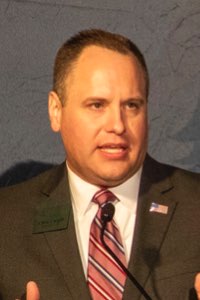
 Chris Cargill
This is not a reprint of a story 10 or even 20 years ago - although it sure could be.
Washington state's education establishment is getting ready to file yet another lawsuit demanding taxpayers spend more money on K-12 education. And the news just so happens to come in the wake of the failure of I-645, which would have repealed Washington's new income tax.
Now that the income tax has survived (for now), it's time to belly up to the taxpayer buffet.
According to reports, the Lake Washington, Tacoma and Yakima school districts are preparing to sue the state for allegedly "failing to fund basic education."
But here's the problem: Washington state doesn't underfund K-12 education. According to the Office of Superintendent of Public Instruction, school district general fund spending reached $19,371 per pupil in 2024–25. A decade earlier, in 2015–16, it was $11,450. That is an increase of roughly 69%.
For a classroom of 25 students, that is a whopping $484,275. This data does not include local spending on K-12, which adds hundreds of millions more. On top of this, Washington’s public schools are serving fewer students.
The state’s Office of Financial Management reports K–12 enrollment of approximately 1.071 million in 2024, compared with 1.116 million in 2019—a decline of roughly 45,000.
So Washingtonians are paying the most they ever have to fund fewer students. And the response of the establishment is to demand more?
They may have a decent argument if the results showed an increase in student outcomes. But that hasn't happened either.
In September, OSPI described statewide assessment scores from spring 2026 as essentially unchanged from the previous year. It reported improvements in attendance and ninth graders passing their classes, which are welcome developments. But stable test scores hardly demonstrate that larger budgets are producing the academic gains families should expect.
The longer view is troubling, too. Washington eighth graders averaged 259 on the 2024 NAEP reading assessment, below their average of 264 in 1998.
Washington Governor Bob Ferguson recently called outcomes in his state "mediocre."
Washington’s education debate repeatedly treats the size of the appropriation as the principal measure of success. When results disappoint, the proposed remedy is another appropriation.
But the one question that's never answered is: how much is enough?
Legislators should require clear answers. Districts should explain their spending growth, distinguish state funding obligations from locally negotiated commitments, and show how staffing and facilities reflect current enrollment. Any proposal for additional money should identify what students will receive and how the public will judge whether it worked.
Washington has an obligation to fund basic education. Education leaders have an obligation to explain how they use that funding.
Taxpayers deserve accountability for their money. Students deserve accountability for their education. But another lawsuit demanding a larger check cannot substitute for either.
Chris Cargill is the president of Mountain States Policy Center, an independent free market think tank based in Idaho, Montana, Wyoming and Washington. Online at mountainstatespolicy.org.

Comments
Loading comments…