
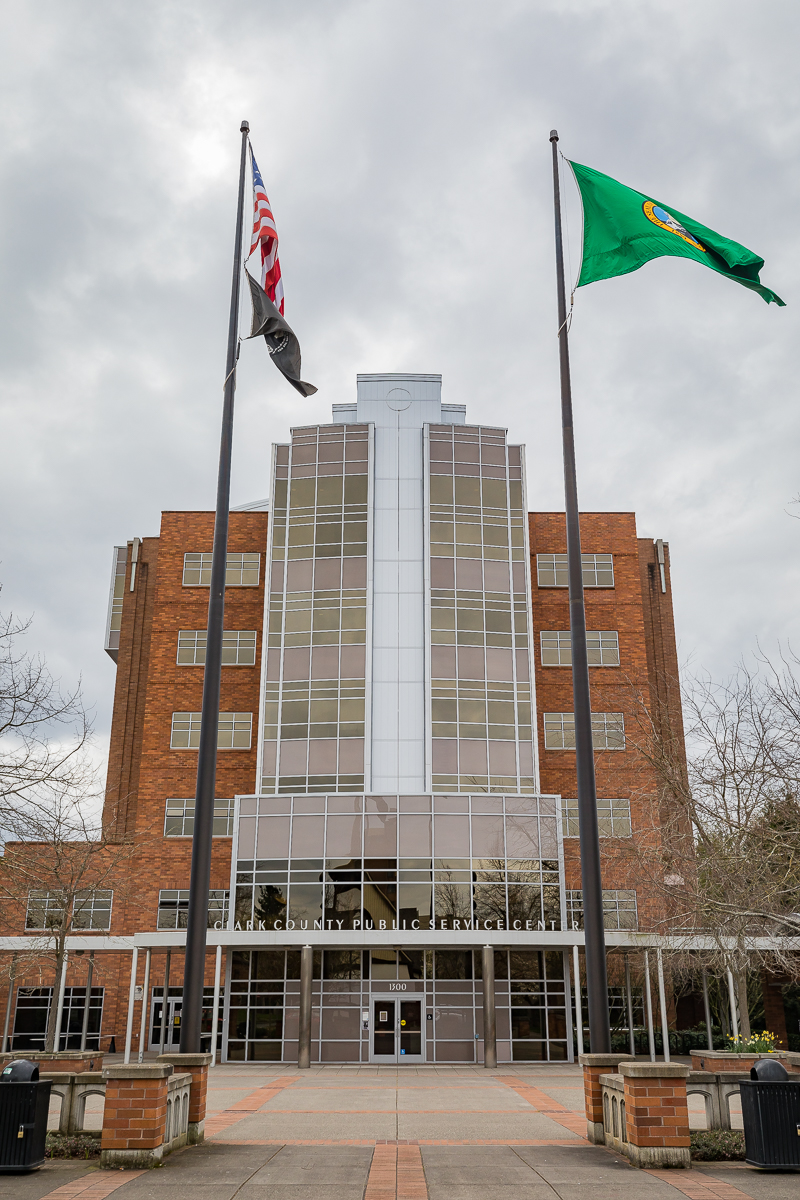
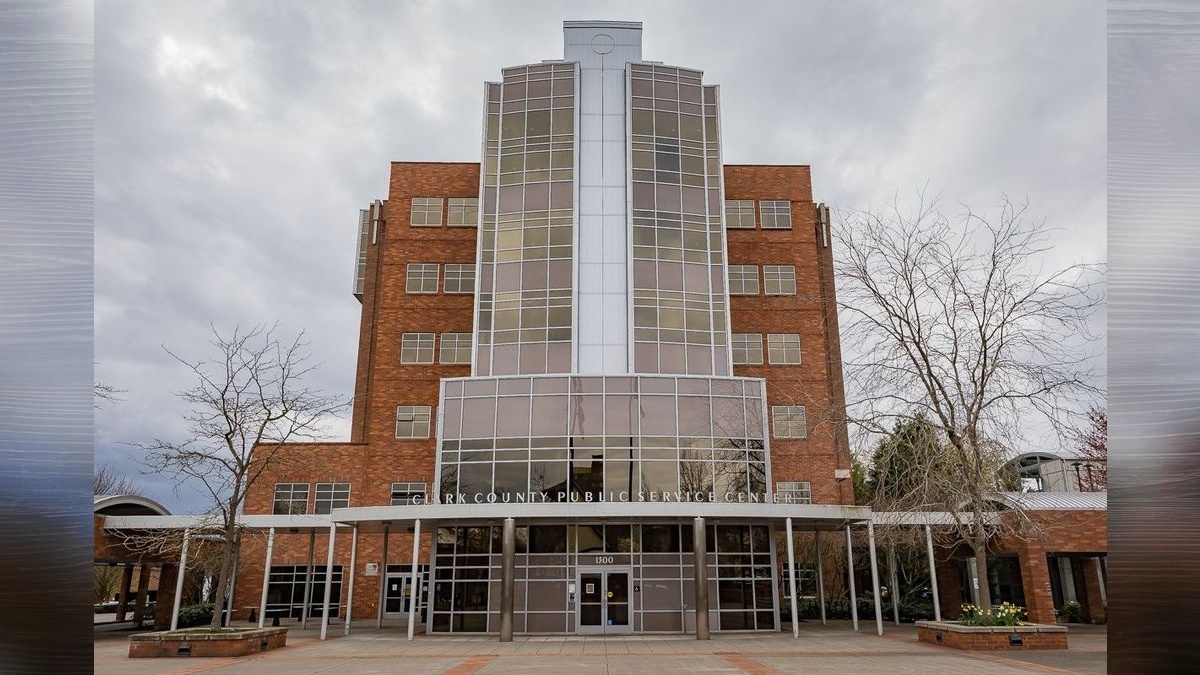
The Clark County Council continued a recent trend of adding fees and/or taxes to county homeowners, coming up with a compromise earlier this week for a new funding mechanism for the Clark Conservation District.
In a 4-1 vote, the council approved a fee of $15.08 per year (plus 10 cents per acre for land owners) for the next 10 years.
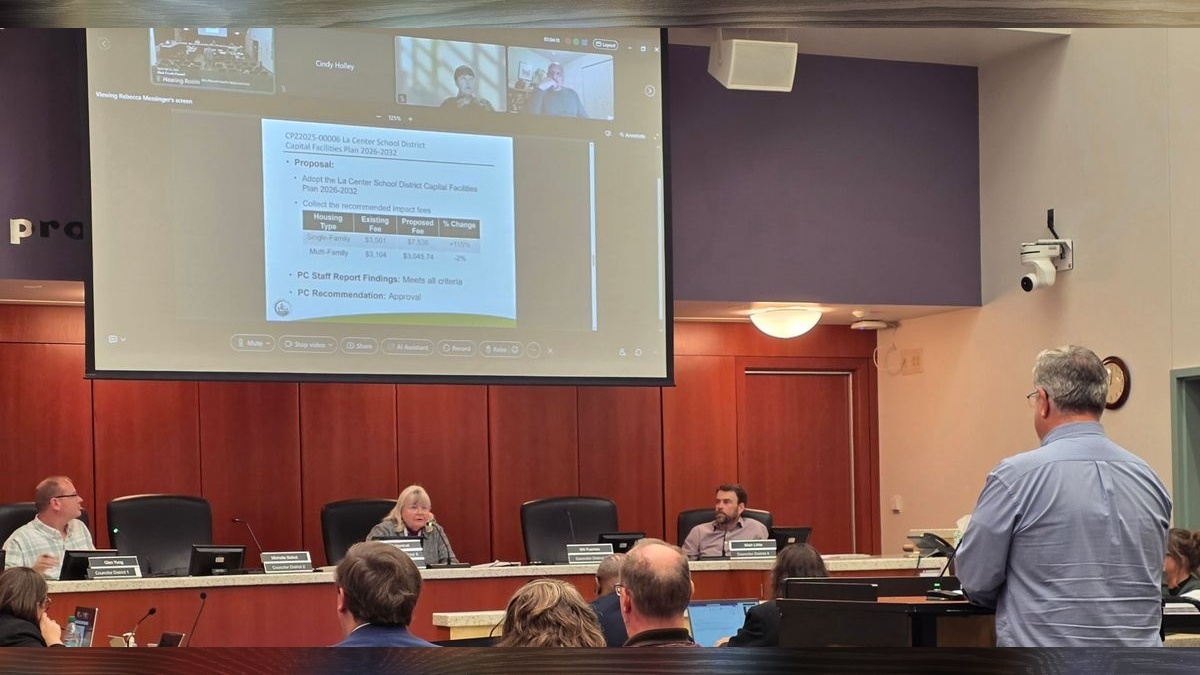
This was after a passionate presentation by the Clark Conservation District and a lengthy discussion by the council at Tuesday evening’s Clark County Council Meeting. Many of the people in attendance who spoke during public comment stood up to voice their support for the Conservation District’s request. There were a handful who were against the proposal, as well.
The Conservation District gave the council five options, recommending Option B, which would have required more than $22 a home. Instead, the council went with Option D, and the $15 fee.
Councilor Michelle Belkot was the lone dissenting voice, although Councilors Matt Little and Glen Yung did show some concern for adding financial pressure on Clark County residents.
Belkot, noting that this council has not seen a fee or tax it does not like, said after the meeting that she fears this is one more drop in the bucket that is filling up quickly.
“It’s another opportunity to continue to tax and fee the crap out of our people,” Belkot said.
She noted that this is the same council that has recently increased property taxes, added a new transportation tax as well as a fire impact tax, and the county is looking to purchase more land for the Legacy Lands Program. The council is also considering a metro parks district fund, she said.
“It’s a runaway train of taxes,” Belkot said.
Fee vs. tax was also discussed Tuesday night.
Officially, it is listed as a fee.
“Call it what it is. It’s a tax. I’ve never heard of a 10-year fee, unless you have a membership to something,” Belkot said. “We need the details on how to opt out.”
The council noted this fee is for 10 years but would also hear updates to the funding throughout the 10 years.
Belkot had a prediction, though:
“It’s never going to be taken off the books,” she said.
Yung noted that when the council was voting on increasing property taxes by 1 percent, he received email after email from constituents.
This fee, Little said, is actually a little more than what the average property owner will be paying from the property tax increase.
Interestingly, Yung said he did not hear from his constituents on this matter.

“Whether it’s a fee or a tax, it affects people the same,” Yung said. “The word ‘fee’ does change how people view this and whether or not they pay attention to it.”
Later, Yung added: “People pay more attention to the word ‘tax’ than they do ‘fee.’”
Little praised the Clark Conservation District for its work and emphasized he has confidence in the district’s leadership. He also said he wanted to ensure the district got started with stable funding. The district has been working under grants.
Still, he pointed out, the district asking for Option B was too much.
The $22 price tag for some people might not be a big deal, he noted. However, the council has a lot of decisions, with organizations asking for a little here and a little there.
“They add up,” Little said.
He even named some of the people in public comment who have reservations regarding the new fee, including longtime government critics Bruce Barnes and Rob Anderson. Little wanted to know they were being heard.
Instead of Option B, he asked that the council look at Options D or E, the less expensive options for residents.
Chair Sue Marshall moved to approve Option B. It was seconded by Councilor Wil Fuentes. The other three councilors were nay-votes. There was then a motion for Option D. Marshall, Fuentes, Little, and Yung said yea. Belkot said nay.
Prior to the vote and discussion, leaders from the Clark Conservation District gave a presentation to the council detailing what the district is, what it does, and why it was asking for a fee.
The district is a special-purpose district, much like a school district or a fire district, and an independent government agency. Its mission includes working with farm and agriculture lands, habitat conservation and restoration, forest health and wildfire resiliency, water quality and quantity, and urban and community conservation.
The Clark Conservation District made more than 200 site visits to properties in the last year, completed more than 50 wildfire risk assessments, funded storage for the equivalent of 150 large dump trucks worth of manure, and reimbursed septic maintenance for close to 600 residents. All of those services were provided for free.
“Even if you don’t use our services, our work touches everyone in the county,” said Zorah Oppenheimer, executive director of the Clark Conservation District. “We all rely on clean water, healthy soil, more sustainable farms, and vibrant habitats.”
She noted that the district is 100-percent grand funded, with only 9 percent of funding that is considered “reliable.” One specific grant that provided 42 percent of the district’s funding is no longer available to the district.
She noted that of the 10 most populous counties in the state, Clark County is the only one that does not support a conservation district.
“Rate revenue will give us flexibility to respond to community needs, regardless of the availability of state or federal funding,” Oppenheimer said.
In the end, the Clark County Council went with starting out the funding with Option D.
“Grants can ebb and flow. That’s true,” Belkot said. “But that doesn’t mean grants can’t come back again. But taxes? They don’t regress. Once they are in, they’re in.”
Comments
Loading comments…