
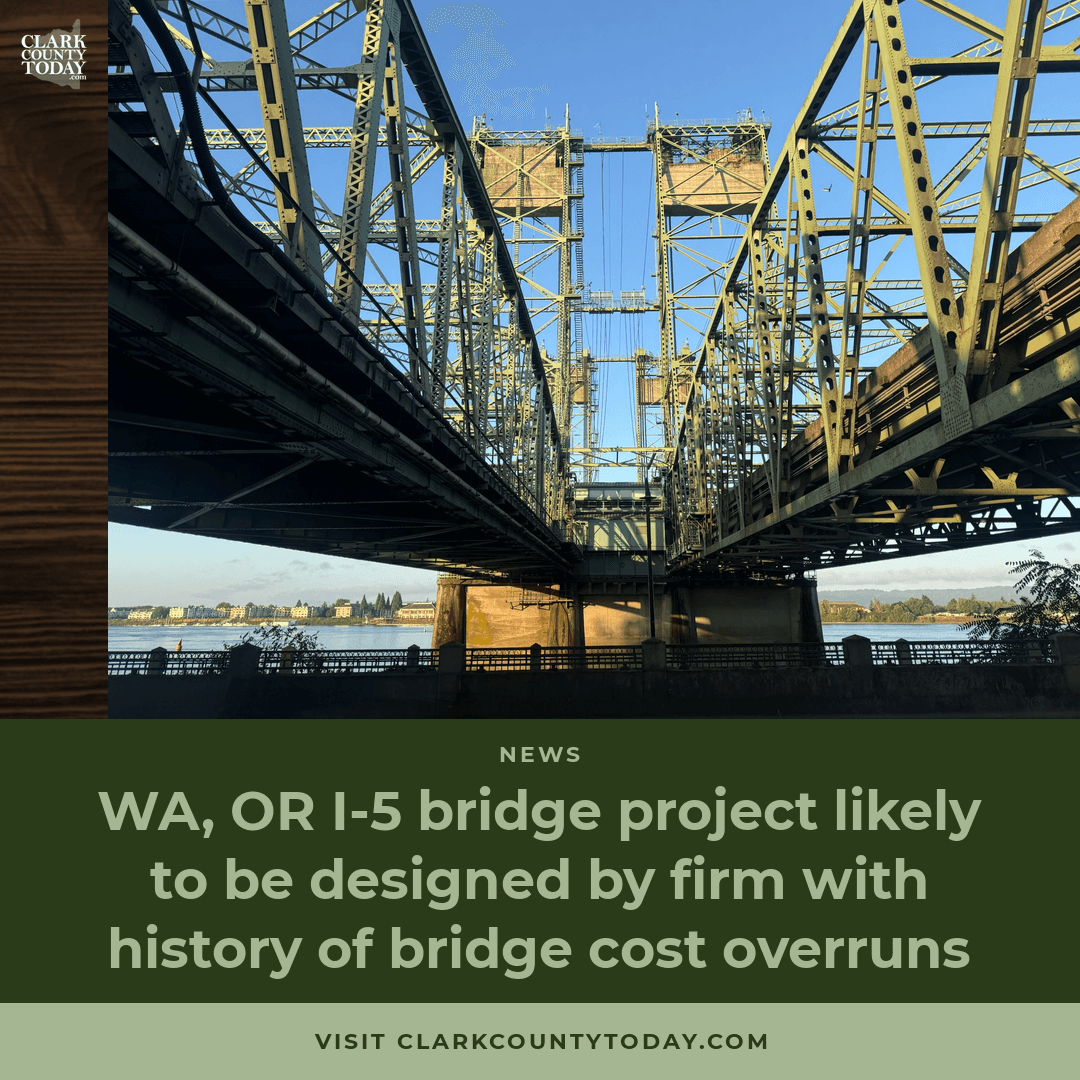
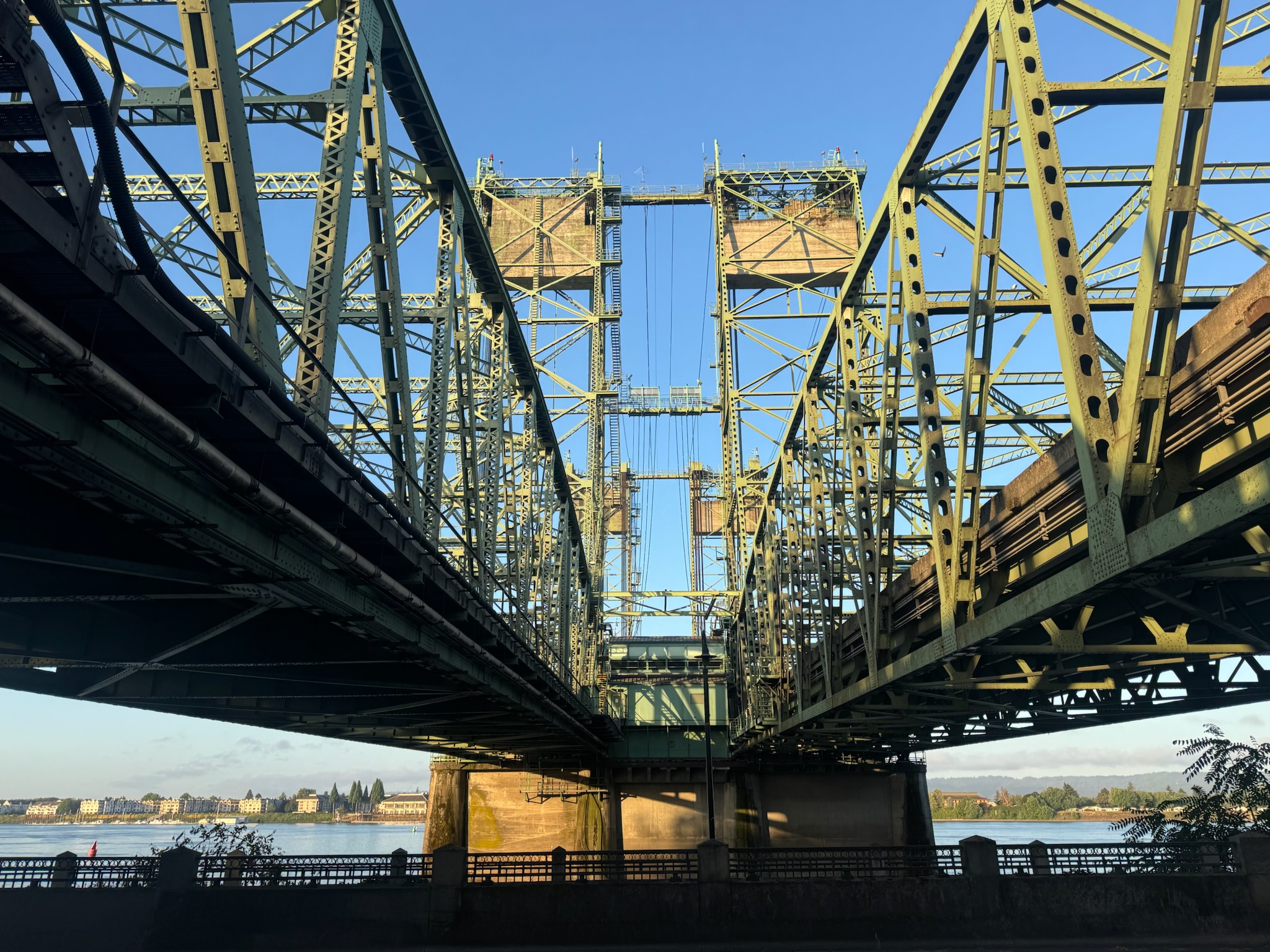
The massive project to replace the Interstate 5 bridge connecting Oregon and Washington is on track to be designed by a trio of companies, including one with a recent history of bridge cost overruns in Oregon and across the country.
In late September, the Interstate Bridge Replacement Program received a single design bid from a joint venture called Columbia River Constructors. The group includes Guy F. Atkinson Construction, Traylor Bros. Inc. and Kiewit Engineering Group — who would lead the project.
Kiewit, a subsidiary of Nebraska-based Kiewit Corp, is one of the nation’s largest contractors. It is building the Interstate 205 Abernathy Bridge in Oregon City, a project that is running more than two years behind schedule. And its estimated cost of $800 million is more than three times the original $250 million price tag in 2018, KGW reported.
Kiewit is now hoping to lead the multibillion dollar project to replace the bridge over the Columbia River months after Maryland dropped it from the second phase of rebuilding the Francis Scott Key Bridge in Baltimore, which collapsed in spring 2024 after a container ship crashed into it.
Maryland Gov. Wes Moore said in an April statement that working with Kiewit was not in the best interest of the state, calling the price tag and timeline “unreasonably high and therefore unacceptable.”
Kiewit’s track record in Oregon in recent years has also raised eyebrows. The company scored poorly under the Department of Transportation’s annual performance reviews for contractors, receiving negative marks on four consecutive ODOT annual reviews dating back to 2022, the Portland Daily Journal of Commerce reported.
The state hired the company in 2024 to design the new Hood River-White Salmon Bridge Replacement Project. The project has since doubled in price to more than $1.2 billion partly because of inflation, but also because the company underestimated the cost of drilled shafts to support the new bridge, according to economist Joe Cortright, who leads the Portland-based think tank City Observatory.
Kiewit spokesperson Bob Kula said in an email that the company does not comment on potential project pursuits, but added that, “we stand behind our long track record delivering complex transportation projects across the U.S.”
Washington, Oregon lawmakers express concerns about lack of competition
Lawmakers on the Joint Oregon-Washington Legislative Action Committee overseeing the bridge project expressed concern in a meeting Monday that the project is moving forward with only one option for the multibillion dollar build.
Oregon state Rep. Thủy Trần, D-Portland, and state Sen. Bruce Starr, R-Dundee, asked program administrators how they plan to hold Kiewit and the other contractors accountable and manage costs.
The Interstate Bridge Replacement Program has already experienced its own cost estimate overruns. It was in 2022 slated to cost up to $7.5 billion, but by March of this year, transportation officials announced a new price tag closer to $14.4 billion.
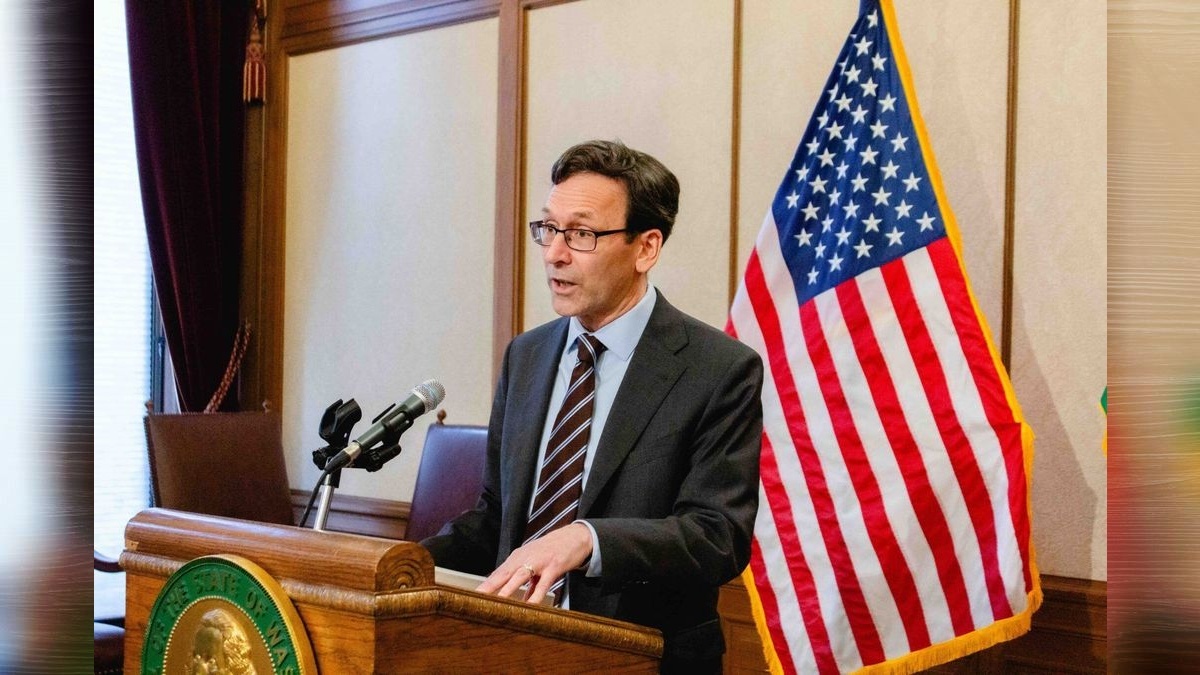
Washington Gov. Bob Ferguson said a contract for the bridge construction will be granted next year, and cars could be driving across the new span by 2035, roughly two years later than previously announced.
Washington state transportation official John White said the interstate bridge project will undergo a progressive design-build, a project delivery method that brings the owner, designer and contractor together early in the design process. The method is known for its greater cost certainty and transparent pricing, he said in response to cost concerns.
Washington state Rep. Ed Orcutt, R-Kalama, and co-chair of the joint legislative committee, said accountability is a concern of his, too.
“Having multiple bidders is important to protect the taxpayers. If you only have one bidder, they can bid whatever they want,” he said in an interview. “Either we pay them or we don’t get the project.”
Some lawmakers at the meeting seemed fine with Columbia River Constructors taking on bridge design in an uncompetitive process. Among them was Oregon state Rep. Susan McLain, D-Forest Grove, who said in an email that the three firms involved in the joint venture will bring together a wider range of resources, expertise and accountability.
“There are very few firms in the country that have the capacity or experience needed to take on a project of this size,” McLain said. “It is not uncommon for this kind of infrastructure work to have a small number of submitters … Moving ahead with a new, seismically resilient bridge is critical to the safety and economic wellbeing of our region.”
Washington state Rep. Jake Fey, D-Tacoma, who chairs the House Transportation Committee, agreed having multiple bidders is preferred but it can be difficult with large projects.
“I am not concerned,” he said. “There were two firms that were interested and they decided to collaborate. What are you going to do? If you can’t make a deal with them, then we go back to the process of seeking qualified bidders.”
Cortwright, the City Observatory economist who attended Monday’s joint legislative meeting, stressed to lawmakers that having only one bidder puts the two states in an untenable bargaining position.
“You are in an active dispute with Kiewit,” Cortright said to the committee members, referring to the Abernathy Bridge cost overruns. “You know that they go over budget, and you’ve been unable to negotiate with them.”
Washington State Standard Reporter Jerry Cornfield contributed to this story.
This story was originally produced by Oregon Capital Chronicle, which is part of States Newsroom, a nonprofit news network which includes Washington State Standard, and is supported by grants and a coalition of donors as a 501c(3) public charity.


Comments
Loading comments…