
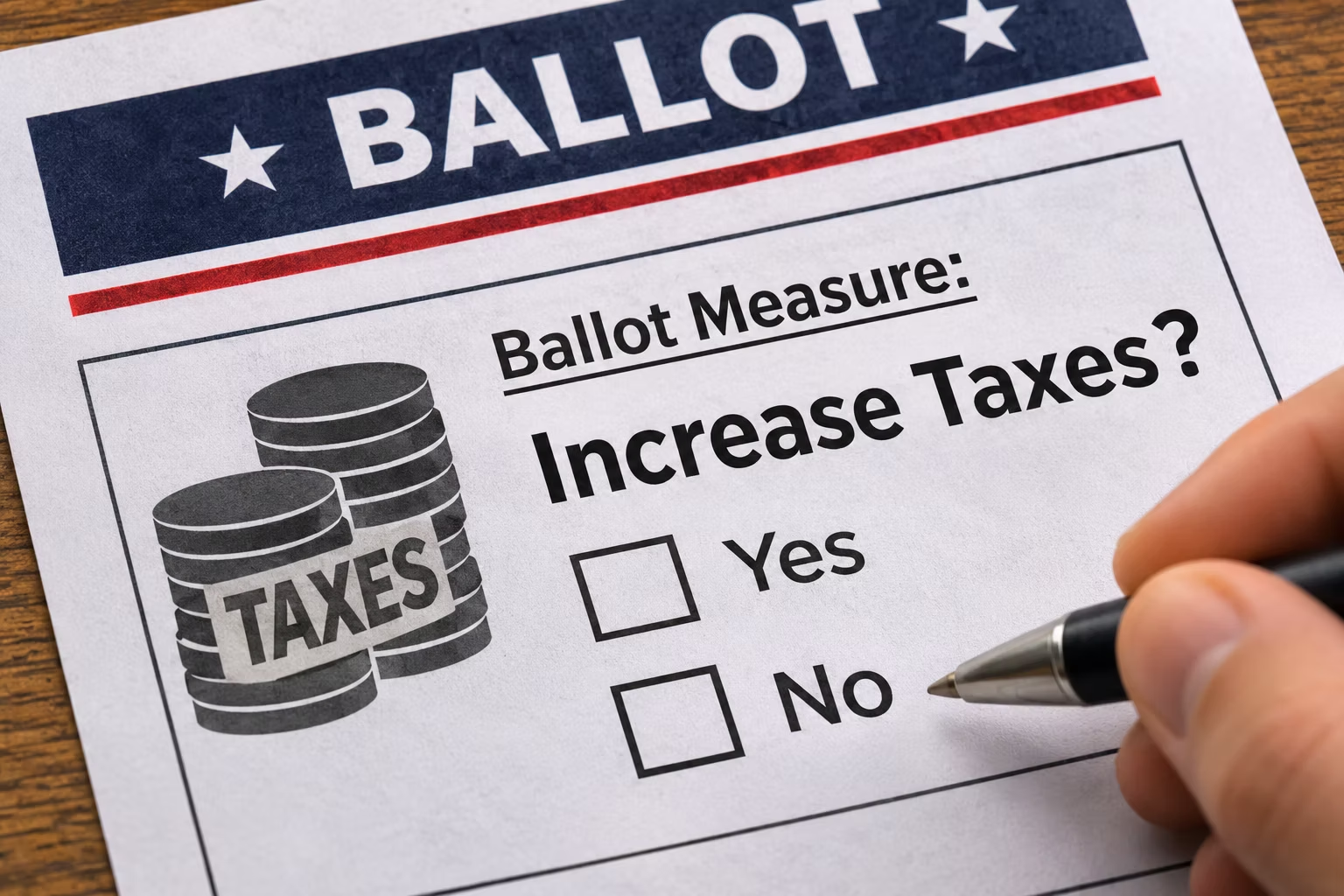
Though ballots are still being counted in several states, enough votes are in to project the outcome for several tax proposals that were considered across the country this election. It appears that when it came to electing candidates, voters were focused on sending a national message. As for tax policy, local policy preferences were more pronounced state by state.

Jason Mercier
Realizing that the vote margins are still in flux, here is where things currently stand on the various tax proposals that were on the ballot.
Supermajority for taxes
Requiring a higher threshold to raise taxes was very popular with voters, with one exception. Iowans approved a constitutional amendment to require a 2/3 legislative vote to increase income taxes. Local voters in Snohomish (Prop 5) and Clark counties (Amendment 25) in Washington state are currently approving supermajority requirements for county tax increases. One failure was in Utah, where a proposed constitutional amendment requiring a 60% vote for ballot measures increasing or creating new taxes was rejected.
Income/Wealth taxes
Perhaps the most nationally watched tax proposal was Prop 40 in California. This first attempt to bring a “Wealth Tax” to the United States is being rejected by Californians. Several European countries have already repealed their wealth taxes due to the economic problems they create.
While many states are moving toward a flat income tax, Colorado appears to be taking a step in the wrong direction with a proposed constitutional amendment allowing a graduated income tax narrowly passing. North Carolina, meanwhile, adopted a constitutional amendment capping income taxes at 3.5%.
Perhaps not a surprise based on the government-imposed propaganda ballot title, Washington voters rejected a repeal of the state’s first income tax. Because the Washington Supreme Court for nearly 100 years has consistently ruled that a graduated income tax is unconstitutional, this new tax still faces a legal challenge with oral arguments currently scheduled for February 5, 2027.
Property taxes
In Wyoming, voters rejected a flawed proposal that attempted to address property taxes without going after the spending that drives the collections. Tennessee voters adopted a constitutional amendment prohibiting a state property tax. Voters in North Carolina also adopted a constitutional amendment restricting the amount local governments can increase property taxes. Florida voters gave approval to a controversial constitutional amendment that expanded the state’s property tax homestead exemption.
Other notable tax votes
Arizona voters are narrowly approving a constitutional amendment to prohibit mileage-based taxes for cars. Missouri voters rejected a constitutional amendment creating a public endowment fund with the goal of phasing out state taxes.
What to learn from Texas?
While voters in our region may be looking in shock and awe at the results of the candidate elections in Texas, there is an important lesson for our states to learn. It is highly unlikely that state leaders in Idaho, Montana, or Wyoming will be proposing tax increases next year. That statement was also true for Texas before the election results. Thankfully for Texas taxpayers, voters proactively protected themselves from an income tax in 2019 by adopting a constitutional ban.
This is why it is so important for policymakers in our region to institutionalize good tax policy when they can so that citizens and businesses aren’t subject to wild swings in tax policy (looking at you, Washington state) from election to election. The first step next session should be to follow the lead of Iowa this year and send voters a constitutional amendment to require a supermajority legislative vote before taxes can be increased.
Jason Mercier is vice president and director of research of Mountain States Policy Center, an independent research organization based in Idaho, Montana, Washington and Wyoming. Online at mountainstatespolicy.org.




Comments
Loading comments…