
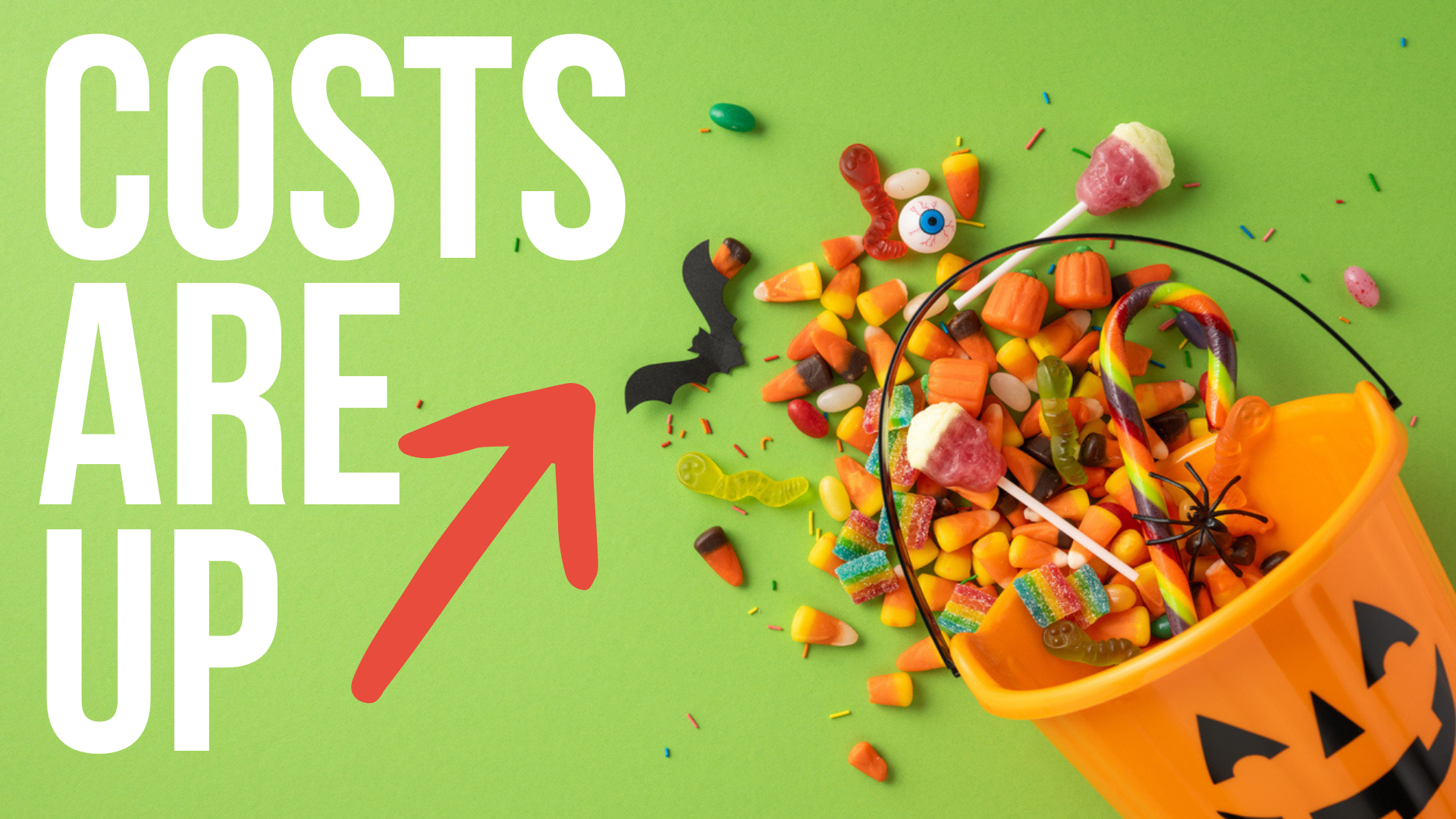
Not even the sweetest night of the year is immune to inflation. According to the Federal Reserve Bank, the cost of Halloween candy has outpaced overall inflation in the United States by more than double between 2025 and 2026.

Pam Lewison
The 7.7 percent cost increase for the spookiest night of the year is tied to numerous factors including weather, changes in international trade, and concerns over sustainable growing practices in cocoa producing countries.
Chocolate is a major component in the top six most popular Halloween candies in the U.S. but Hawaii is the only state capable of growing cocoa beans at commercial scale; meaning the majority of chocolate used to make peanut butter cups, chocolate covered peanuts, and other similar candies, is imported. The West African nations of Cote d’Ivoire and Ghana lead the world in cocoa bean production. U.S. chocolatiers source most of their cocoa beans from Ecuador, Cote d’Ivoire, Ghana, the Dominican Republic, and Peru.
With a supply chain that starts as far away in some cases as another continent, it becomes more important to understand how the food supply chain is affected by things farmers in the U.S. might not experience but still understand, like weather.
Drought reportedly hit West Africa in 2022, followed by heavy rains that brought disease to cocoa plants and sugar producers alike in 2023, disrupting the growth and shipping of both. Similar weather-related disruptions occurred in South America, further slowing the supply chain in subsequent years and causing a price increase because of ingredient scarcities. In all these instances, the key factor was not heat, however, it was lack of humidity that caused a problem. Researchers have discovered cocoa plants are fickle and need nearly constant humidity to thrive and deliver cocoa beans of consistent size year after year.
Lack of humidity for cocoa production isn’t the only broken link in the candy supply chain, though. Before 2014, sugar was imported into the U.S. under a quota and duty-free agreement with Mexico. However, the American Sugar Coalition alleged the agreement was undercutting domestic production of sugar, effectively ending the agreement. After the allegation, a price floor for sugar was implemented for all sugar imported into the U.S. regardless of place of origin, increasing the overall cost of sugar.
In recent years, “sustainability” has been a keyword in agricultural discussions and candy makers have not been immune to its effects. One of the outgrowths of these discussions has been the Living Income Differential, or LID. The LID is a premium payment of $400/ton added to the price floor for premium cocoa. Designed to be paid directly to the grower, the LID is meant to help even the playing field for small- and medium-sized growers by providing additional income they would otherwise not receive. While LIDs are endorsed by companies like Mars, some in the industry have labeled them as counterproductive.
Do these policies change how much candy will be given out this weekend or how Americans will perceive the ghostliest of holidays? Probably not. But they do illustrate the complexities of the food supply chain in a new way. Weather, trade, and policy have all impacted cocoa and sugar production during the last few years to escalate the overall cost of sweet treats this Halloween. U.S. neighborhoods are not immune to that cost inflation.
Rather than thinking of the higher cost of Halloween candy as a nuisance to be ignored, we should treat it as a learning opportunity. There are parts of the cost escalation that can be controlled by our lawmakers. Lawmakers can control the policies they choose to enact and ensure the policies they enact keep food – and candy – costs reasonable for families of all income levels. No child wants to open their trick-or-treat bags to find they’ve been duped like Charlie Brown on Halloween night and have to sadly announce they got “a rock” instead of a “candy bar” to delight in.
Pam Lewison is the director of Agriculture Policy at the Washington Policy Center.



Comments
Loading comments…