
Editor’s note: Opinions expressed in this letter to the editor are those of the author alone and may not reflect the editorial position of ClarkCountyToday.com
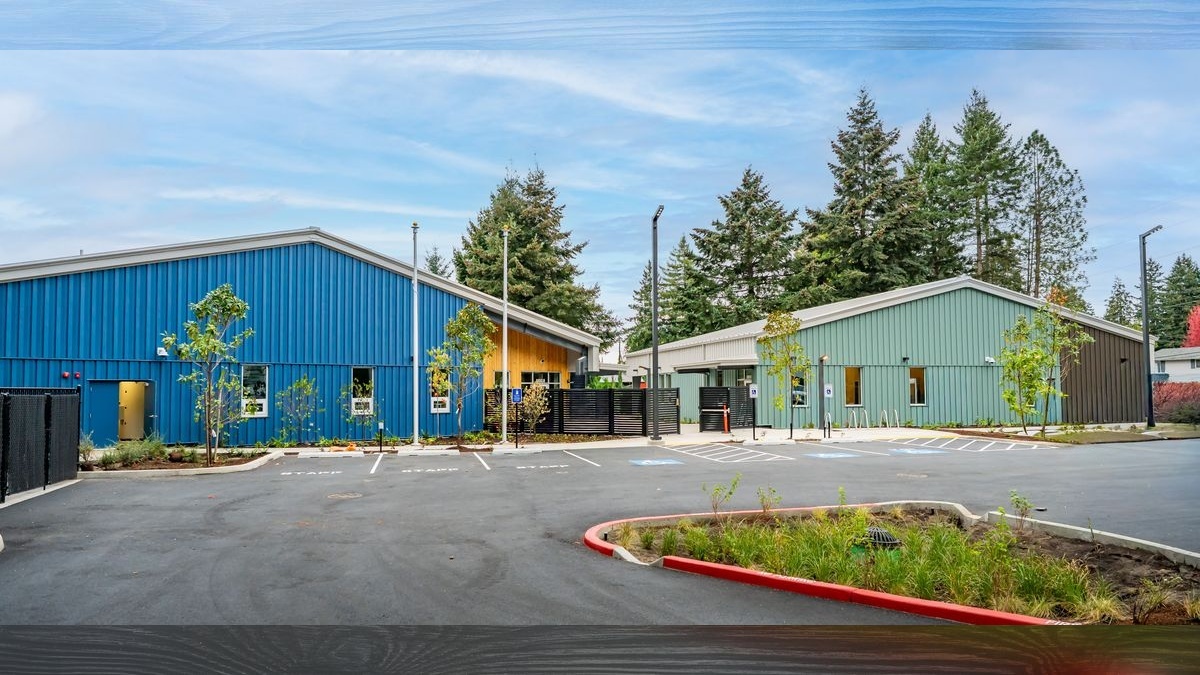
Vancouver’s new 120-bed Bridge Shelter is almost ready to open. The City has explained the beds, meals, showers, treatment, case management and other services that will be provided. But another part of the operation deserves the same attention: how public safety will actually work when someone violates the rules.

Peter Bracchi
From the start, there are really two systems.
Inside the Bridge Shelter, residents will be governed by a code of conduct administered by Do Good Multnomah. Outside the shelter, Vancouver has built a broader homelessness-response system centered on HART outreach, police enforcement, prosecutors and Community Court. That system intentionally gives people opportunities for outreach, services and diversion before some lower-level violations move through the traditional criminal-justice process.
Neither approach is automatically unreasonable. The important question is how those two systems connect when conduct becomes more serious or keeps repeating.
The first step should be the easiest to understand: the Bridge Shelter’s code of conduct. Yet before opening, the public should be able to see exactly what those rules are. A code means little without knowing what happens when it is violated. There should also be a clear record of incidents — warnings, repeated violations, removals, police calls and other serious events — so the City can determine whether the system is working rather than relying on anecdotes months or years later.
Then comes the harder transition. A violation of a shelter rule is not necessarily a violation of law. But threats, assaults, theft, vandalism, illegal drug activity, trespassing and other conduct can move beyond an operator’s internal rules. At that point, responsibility must move somewhere else. HART may become involved in outreach or displacement issues. VPD may become involved in enforcement. Prosecutors determine how cases proceed, and eligible lower-level offenses may enter Community Court rather than the traditional court system.
Vancouver has encountered this problem before.
When the old Navigation Center opened in 2018, the City held Good Neighbor Meetings with nearby residents, including a meeting specifically addressing lawful and unlawful camping. Shortly afterward, neighborhood complaints were reaching City officials, and internal records show City staff and police discussing what officers could legally enforce and under what circumstances.
A January 2019 VPD email captured the problem in one sentence: “The public often gets confused about what officers can and cannot do in the moment.” The same internal discussion dealt with probable cause, arrest authority, warrant requirements and enforcement of the unlawful-camping ordinance.
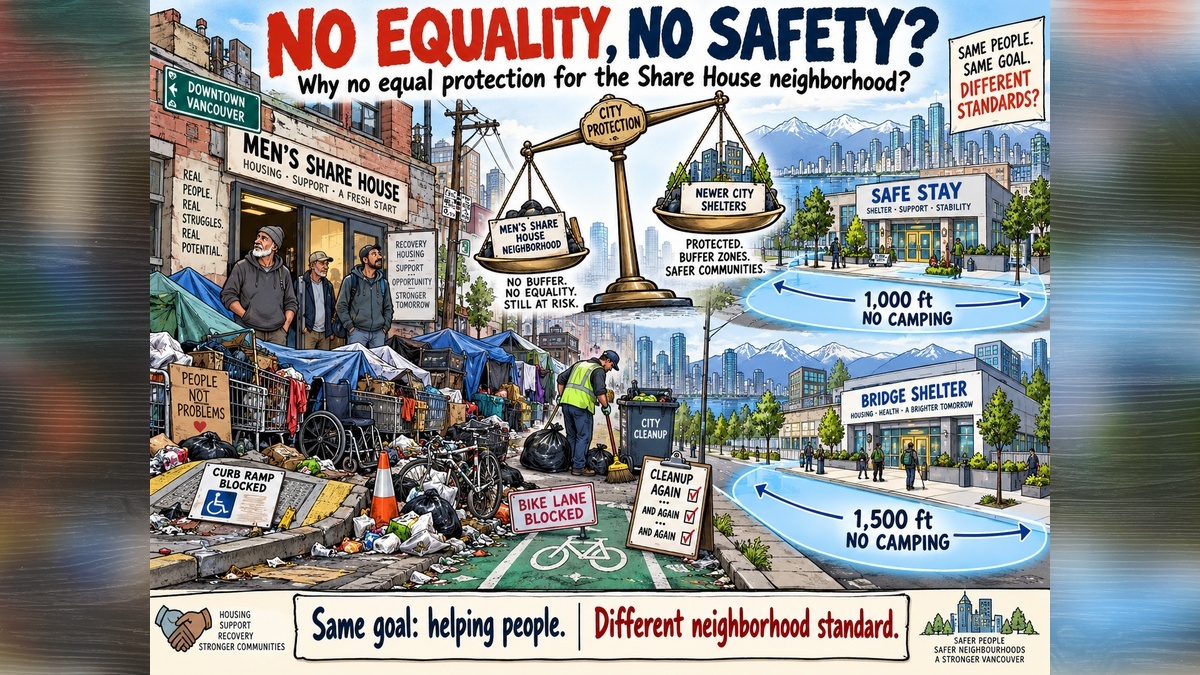
Eight years later, Vancouver has a much larger and more sophisticated system. HART exists. Community Court exists. Safe Stay and Safe Park exist. The Bridge Shelter will have professional operators, a code of conduct and a 1,500-foot camping protection area.
That should make the chain of responsibility clearer than it was during the Navigation Center era.
Before the Bridge Shelter opens, the City should explain that chain in plain language:
Where can the public read the Bridge Shelter code of conduct?
How are violations documented and reported to the City?
What specific conduct results in a warning, suspension or removal?
What conduct requires an immediate VPD response?
If someone is removed, who becomes responsible for that person outside the shelter?
How will the 1,500-foot camping restriction be enforced? Which violations are eligible for Community Court, which proceed through regular court, and what happens when someone repeatedly refuses shelter rules, outreach, citations or court requirements?
Those are not questions based on an assumption that the Bridge Shelter will fail. They are questions that should be answered precisely because Vancouver has invested heavily in trying to make this shelter work.
The Bridge Shelter promises safety and stability for the people living inside it. The surrounding community deserves to know how that same safety will be protected outside its doors.
Vancouver has built the system. Now show us how the system works when someone crosses the line.
Peter Bracchi
Vancouver
Comments
Loading comments…