
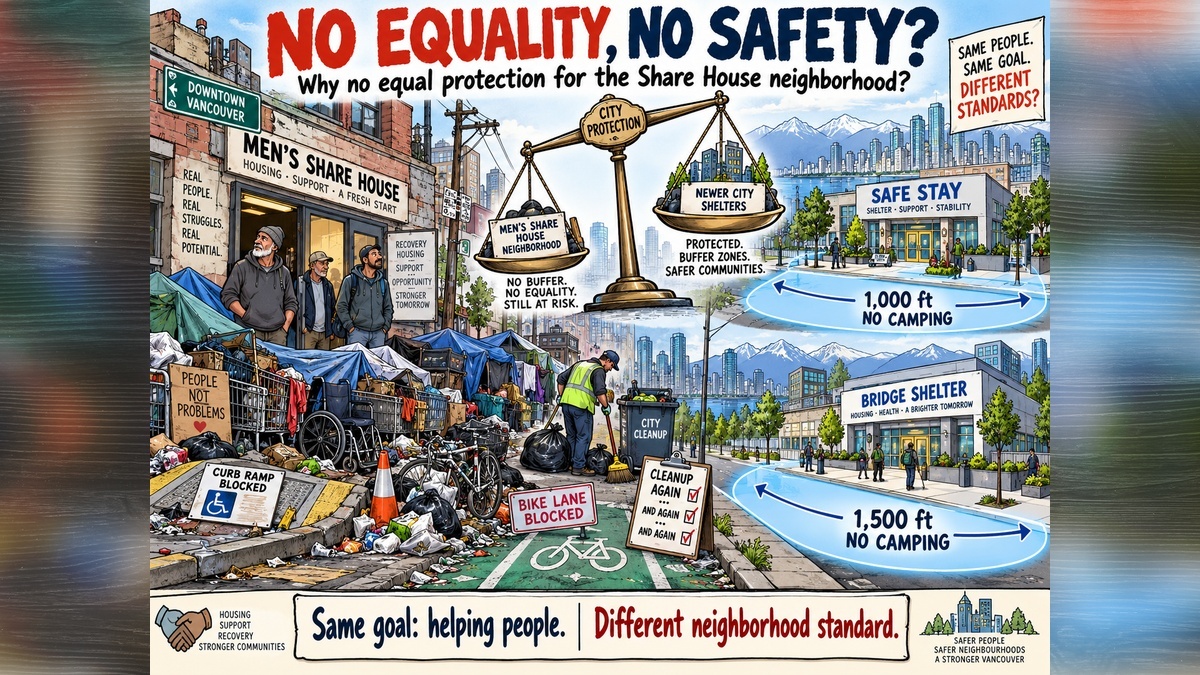
As the homeless camp grows near the Share House in downtown Vancouver, the Vancouver City Council voted to ban camping, or outdoor habitation, within 1,500 feet of the new bridge shelter that is scheduled to open later this year in the Vancouver Mall Neighborhood.
That facility will have 120 available beds, as well as resources for the homeless to use in an effort to find housing, to improve their situations.
The city already bans camping within 1,000 feet of its four Safe Stay communities.
Still, that led us to wonder: If the council can ban camping in one, two, or even five areas of the city, why can’t it just ban camping throughout the city? Are some neighborhoods just sacrificed?
The city’s Homeless Assistance and Resource Team (HART) responded.
“Our goal is not, and has never been, to designate some neighborhoods as places where unsheltered homelessness is acceptable and others where it isn’t,” concluded Jamie Spinelli, HART manager, in a statement to Clark County Today. “It is to reduce unsheltered homelessness itself while managing the very real impacts it can have on both people living outside and the surrounding community. As we continue adding shelter and other capacity, we have more ability to move people indoors and reduce reliance on public spaces for habitation.”
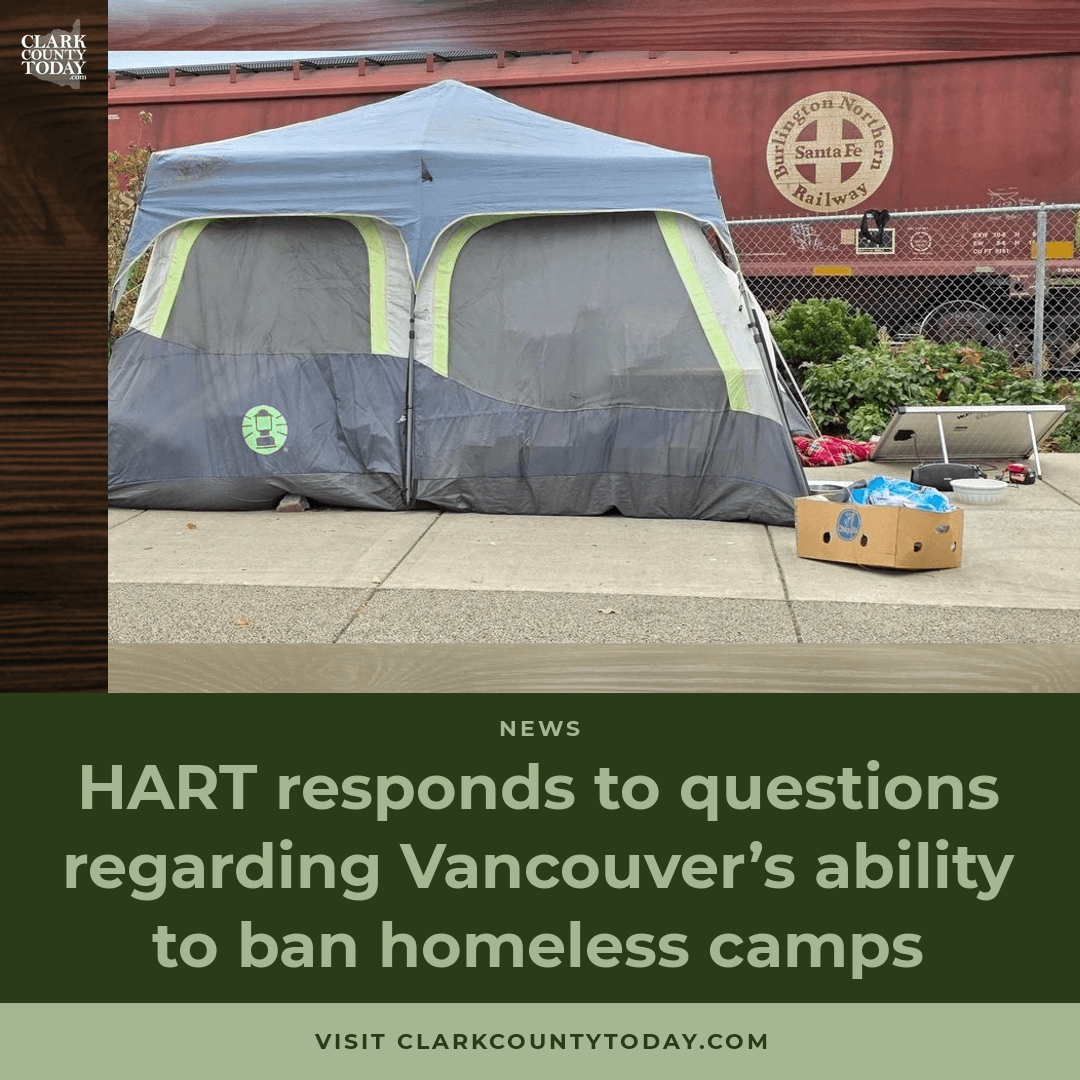
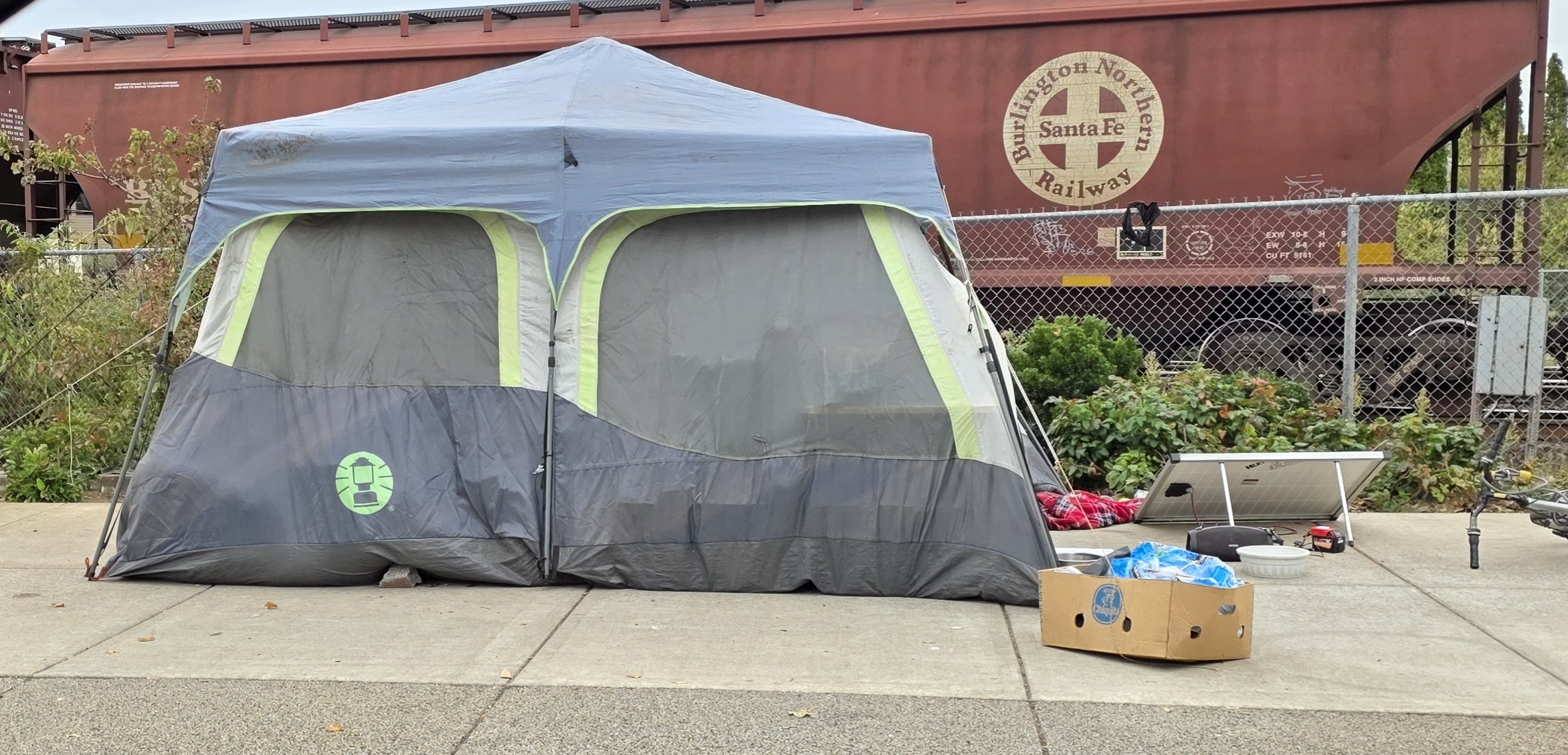
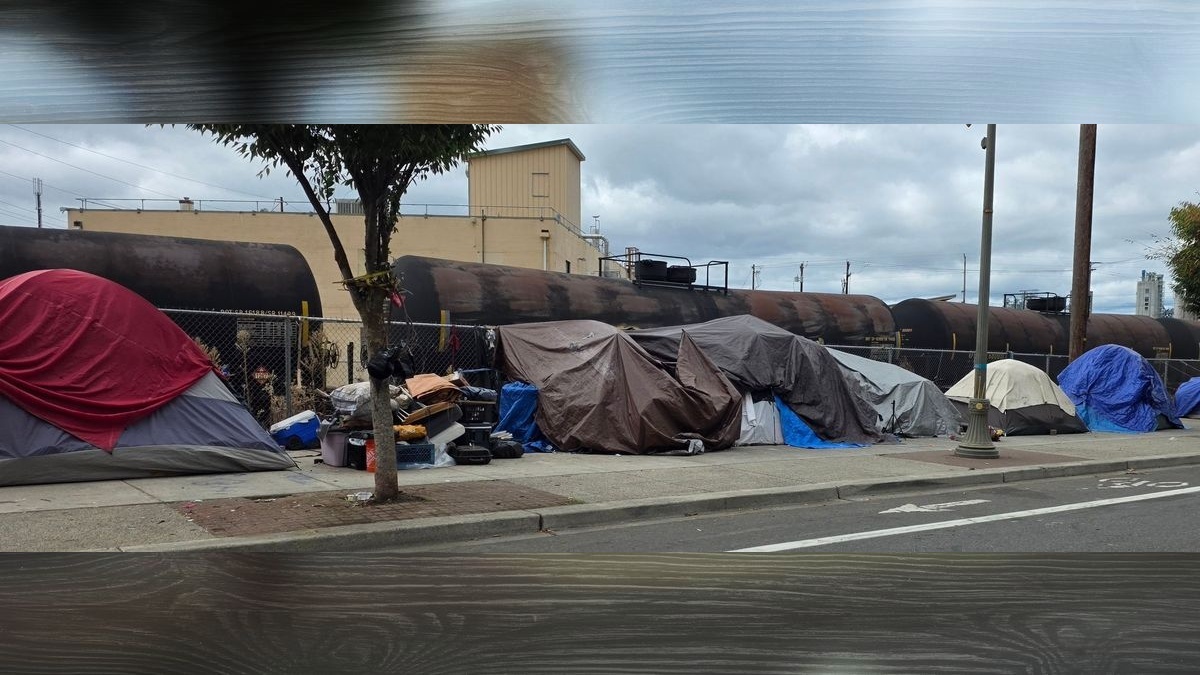
On Thursday, Clark County Today counted more than 100 tents/tarps in just a few blocks set up on sidewalks and in bike lanes near the Share House close to downtown Vancouver. The conditions there this week — and for months or even years — are deplorable.
Spinelli noted that camping is already prohibited in many places in the city but the system in the city and in Clark County does not have the capacity to respond to unsheltered homelessness. There also are not enough beds in shelters. Not enough law enforcement. Not enough space in the jail if criminalizing the homeless were even an option.
The city does use enforcement when appropriate but HART does not believe enforcement alone is an effective strategy to face the problems associated with homelessness.
“None of that means the conditions you saw near Share House are acceptable, because they aren’t,” Spinelli said. “Living outside on public property is not an acceptable long-term outcome for the people living there or for the rest of the community. HART works in that area regularly, and I don’t think anyone from the city would tell you that we’re satisfied with its current condition. But the fact that an encampment exists does not mean the city is ‘allowing’ it, is unconcerned about it, or considers those conditions acceptable. It means we continue to work on the problem.”
The full statement from Spinelli also refers to the former homeless camp along the Burnt Bridge Creek Trail near NE Andresen Road. That encampment is gone and the area is closed to camping. That took months of work. Some who lived there entered shelter, Spinelli said. Some ultimately moved into housing. Others entered treatment. And yes, some are people still living outside, but elsewhere.
“That last group is particularly relevant to your question because clearing an encampment and ending someone’s homelessness are not the same thing,” Spinelli said.
Spinelli also had a question of her own:
“If it were illegal tomorrow for anyone to live outside on public property 24 hours a day, where would the 500+ people currently living outdoors in our community realistically go?”
Here is Spinelli’s full statement:
I think your question assumes that passing an ordinance prohibiting camping everywhere would mean camping would no longer occur anywhere, and unfortunately, it’s just not that simple.
Camping is already restricted throughout Vancouver, including a citywide prohibition during daytime hours and 24-hour prohibitions in a number of locations, including the buffer areas around City Safe Stays, Safe Park and the coming Bridge Shelter. The City also closes specific areas to camping when conditions warrant it.
Neither Vancouver nor the larger Clark County system currently has the capacity to respond to unsheltered homelessness primarily through enforcement, and that isn’t just a question of whether we have enough shelter beds. An enforcement-led approach would require substantially more law enforcement, jail, prosecution, public defense, and court capacity. For example, Clark County currently reports that its jail has had no available beds 88% of the time since January 2025. A citywide camping ban doesn’t create the jail capacity necessary to enforce it; and because camping is a relatively low-level offense, arresting someone for it generally doesn’t result in that person remaining in jail for an extended period of time. If the person still has nowhere else to go when they are released, we have spent a significant amount of public resources and not actually resolved the problem.
The City does, however, use enforcement, and there are circumstances where it is absolutely appropriate. We just don’t believe enforcement alone is an effective homelessness strategy.
Burnt Bridge Creek is actually a good example, and one Clark County Today has previously reported on. That encampment is now gone and the area is closed to camping. Getting there took months of work, resources dedicated to that location, and multiple approaches and pathways for the individuals living there. Some people entered shelter; some ultimately moved into housing; some entered treatment or other services; some required enforcement; and for some, it took a combination of those things. It’s also true that some people from that encampment are still living outside somewhere else. That last group is particularly relevant to your question, because clearing an encampment and ending someone’s homelessness are not the same thing.
There is no single intervention that works for every person experiencing homelessness, and right now we don’t have enough capacity in any of those pathways to resolve unsheltered homelessness for everyone living outside in Vancouver or Clark County. The City has spent the last several years trying to build that capacity. We’ve added four Safe Stay Communities, Safe Park, expanded outreach and encampment response efforts, and we’re now building the 120-bed Bridge Shelter, which will open before the end of the year. We’ve also increasingly closed areas to camping as we’ve created additional alternatives to living outside.
None of that means the conditions you saw near Share House are acceptable, because they aren’t. Living outside on public property is not an acceptable long-term outcome for the people living there or for the rest of the community. HART works in that area regularly, and I don’t think anyone from the City would tell you that we’re satisfied with its current condition. But the fact that an encampment exists does not mean the City is “allowing” it, is unconcerned about it, or considers those conditions acceptable. It means we continue to work on the problem.
Sure, the City could add a citywide ban on the books, but, again, a ban doesn’t create more police officers, jail beds, public defenders, treatment beds, shelter beds, or apartments. Nor does it answer the most basic operational question, fundamental to the issue of people living outside: after we tell someone they cannot be here, where are they actually going to go?
Not in theory, not where we would like people to go, and not where someone thinks they should go. In real time, with the capacity that exists across all of our relevant local systems right now, if it were illegal tomorrow for anyone to live outside on public property 24 hours a day, where would the 500+ people currently living outdoors in our community realistically go? If the answer requires the use of enforcement, that raises another set of practical questions. How many officers and deputies would it take to enforce that prohibition around the clock across the entire city and county? If someone cannot or will not comply, at what point should law enforcement escalate a low-level camping violation? And after someone is cited, arrested or booked and released, what has actually changed if that person still has nowhere else to go?
Those aren’t rhetorical questions. They are the practical questions a jurisdiction has to answer if it actually intends to implement a policy rather than simply add one on the books.
Our approach has been to use the resources and tools we have as intentionally as we can — expanding shelter and housing capacity and options, providing outreach and more accessible behavioral health connections, reducing barriers to accessing those and other services, addressing the most problematic encampments, using enforcement where it’s necessary, and creating additional restrictions on outdoor habitation as we create meaningful alternatives to it.
Our goal is not, and has never been, to designate some neighborhoods as places where unsheltered homelessness is acceptable and others where it isn’t. It is to reduce unsheltered homelessness itself while managing the very real impacts it can have on both people living outside and the surrounding community. As we continue adding shelter and other capacity, we have more ability to move people indoors and reduce reliance on public spaces for habitation.
Comments
Loading comments…