
Editor’s note: Opinions expressed in this letter to the editor are those of the author alone and may not reflect the editorial position of ClarkCountyToday.com
Clark County voters face two propositions that would commit taxpayers to substantially higher spending on the county’s criminal-justice system. Proposition 12 would authorize up to $366.2 million in general-obligation bonds for jail expansion and related facilities. Proposition 13 would increase the county’s property-tax levy capacity by an estimated $51.4 million annually for additional law-and-justice personnel.
The county has a legitimate problem: its 1984-era jail is aging and frequently operates under severe capacity restrictions. But acknowledging that problem does not automatically establish that the proposed solution is the right one.

Dick Rylander
The most important question is the size of the expansion.
The county currently emphasizes a 739-bed jail, compared with approximately 519 available beds today. That represents roughly a 42% increase. Yet the county’s underlying planning documents examined by PFM contemplate a substantially larger facility. PFM analyzed a partial-build scenario totaling 739 beds but also examined a full-build configuration reaching 931 beds when the Jail Work Center is included.
That raises a fundamental question: What jail capacity does Clark County actually need?
The answer is less certain than the ballot campaign might suggest. PFM noted that the county lacks complete information about how many bookings would have occurred if overcrowding restrictions had not been imposed. When a jail is full, booking restrictions necessarily suppress the number of people entering the facility. Consequently, today's jail population cannot simply be extrapolated into the future as though every potential booking were being accommodated.
The county's projections also rely in part on an assumption that increasing law-enforcement staffing will increase bookings. That may occur, but it is an assumption—not a demographic certainty.
That distinction matters when taxpayers are being asked to finance infrastructure for decades.
The financial commitment is considerable. The county estimates that $366.2 million of authorized bonds will ultimately require approximately $710.7 million in debt service, including interest. The county estimates the average homeowner's cost at approximately $86 annually for a $550,000 home, but the aggregate obligation extends across decades and across future generations of taxpayers.
Proposition 13 presents an even more consequential long-term commitment. Unlike a bond that eventually expires, a levy-lid lift establishes additional ongoing taxing capacity. The county estimates the average $550,000 homeowner would pay approximately $242 more annually.
Supporters argue that additional personnel are essential if the jail is expanded. That is a reasonable argument. But it also illustrates the circularity of the two propositions: taxpayers are being asked to approve a larger facility because the county needs more capacity, and then approve a continuing tax increase to hire the personnel necessary to operate that larger facility.
There are alternatives worth examining before making such a commitment.
The county is already adding jail capacity, including 64 beds at the Jail Work Center. A phased approach could allow officials to measure actual demand after those beds become operational before committing taxpayers to the full proposed expansion and its associated operating costs.
Modernizing an aging jail may also be necessary. But renovation and expansion are not synonymous. Voters can recognize the need to repair an obsolete facility while still asking whether another 220 beds—or ultimately a facility capable of holding 931 people—is justified.
The issue, therefore, is not whether public safety matters. It plainly does.
The issue is whether Clark County has demonstrated that this particular combination of expanded incarceration capacity, long-term borrowing and permanent tax increases is the most prudent response.
Before approving hundreds of millions of dollars in debt and tens of millions of dollars in recurring taxes, voters have reason to demand more precise population forecasts, clearer alternatives analysis and measurable performance standards.
A serious jail problem deserves a serious solution. But seriousness should also mean scrutinizing the size, cost and assumptions behind the proposed solution before asking taxpayers to commit for decades. It’s important to ask questions and get answers before voting.
Dick Rylander
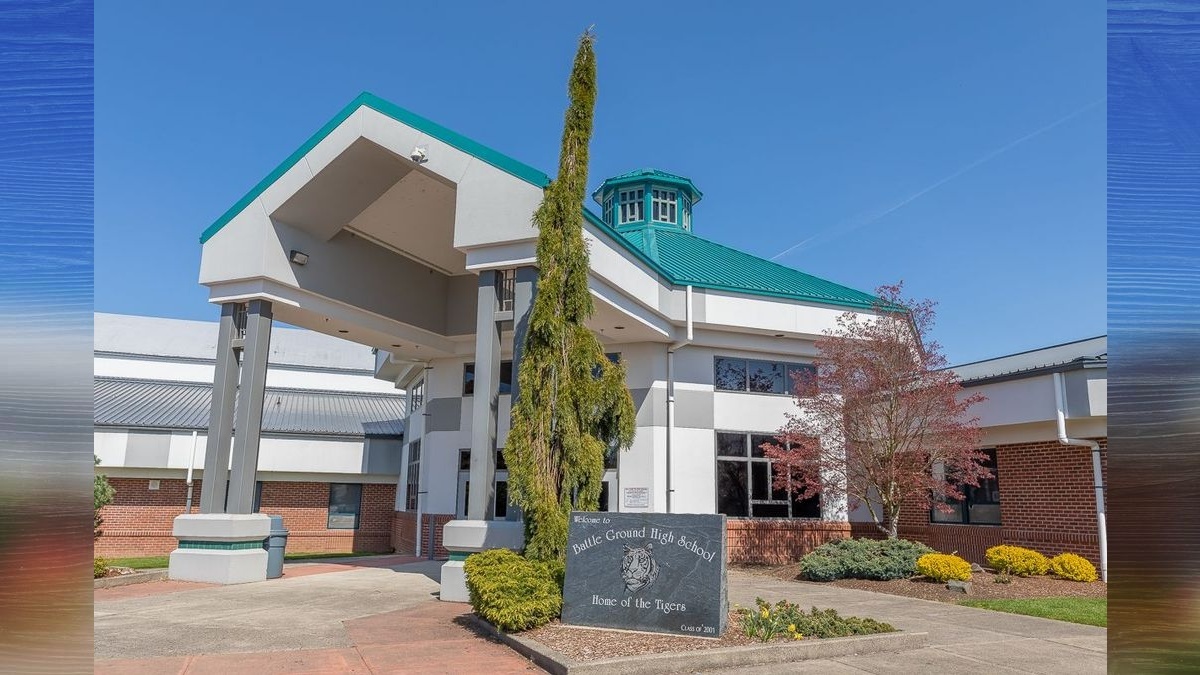
Battle Ground


Comments
Loading comments…