

.jpg)
Editor’s note: Opinions expressed in this letter to the editor are those of the author alone and may not reflect the editorial position of ClarkCountyToday.com
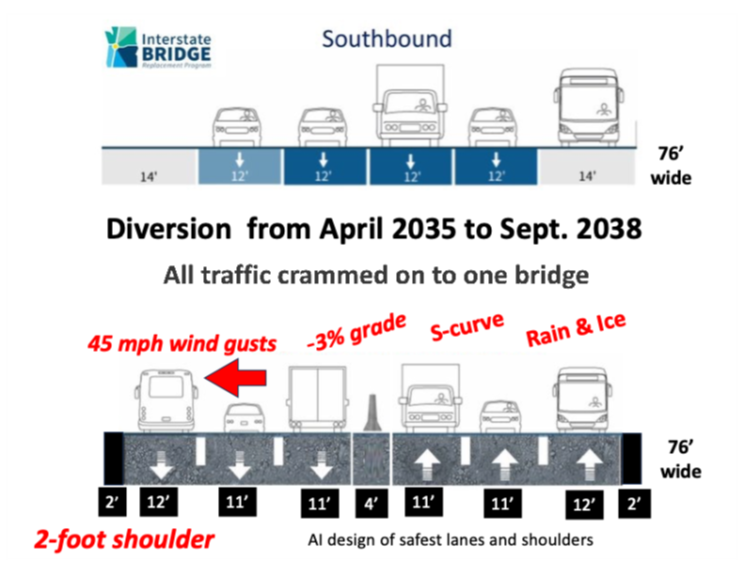
The Interstate Bridge Replacement Program (IBR) plans to complete a new Southbound bridge by 2033. The IBR will then close the two existing bridges and divert all Northbound and Southbound traffic onto the new Southbound bridge for about four years while the old bridges are demolished and a new Northbound bridge is built.

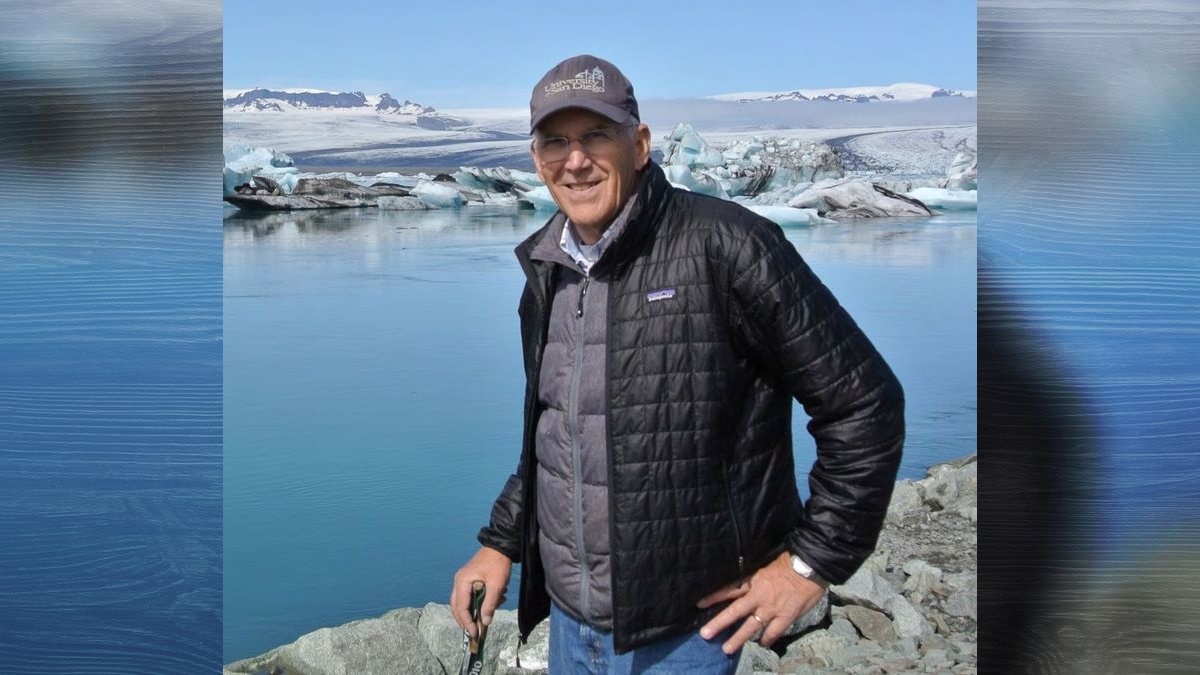
Bob Ortblad
The Southbound bridge is designed with a 76-foot-wide roadway for four lanes of traffic. The IBR has not disclosed how it plans to fit six lanes of northbound and southbound traffic on a 76-foot-wide roadway. So, I asked Artificial Intelligence (AI) to design the safest allocation of lanes and shoulders. I then asked AI to calculate safe speed limits based on additional bridge design factors. AI says a safe limit for cars will be 30 mph and trucks 20 mph in dry conditions. Wind conditions with gusts of 45 mph will reduce cars to 25 mph and trucks to 15 mph. Heavy rain or ice reduces cars to a crawl of 5 mph to 10 mph and closes the bridge to trucks.
The following compounding factors were entered into an AI analysis.
- S-curve: 1,510-foot centerline length with 700-foot offset and a straight-line 500-foot transition between curves, with 6% superelevation.
- -3% grade
- 2-foot shoulders
- 12-foot right lanes
- 45mph wind gusts
- Frequent rain and ice
I suggest the IBR run its own AI analysis on both the temporary diversion and the final design.
Carley Francis, IBR interim program administrator, has refused to allow WSDOT and ODOT safety engineers to do an independent safety analysis of the IBR’s bridge design. She claims FHWA and FTA’s review and Record of Decision somehow provide immunity from citizens’ public safety questions.
Bob Ortblad MSCE, MBA
Seattle, WA
Comments
Loading comments…