
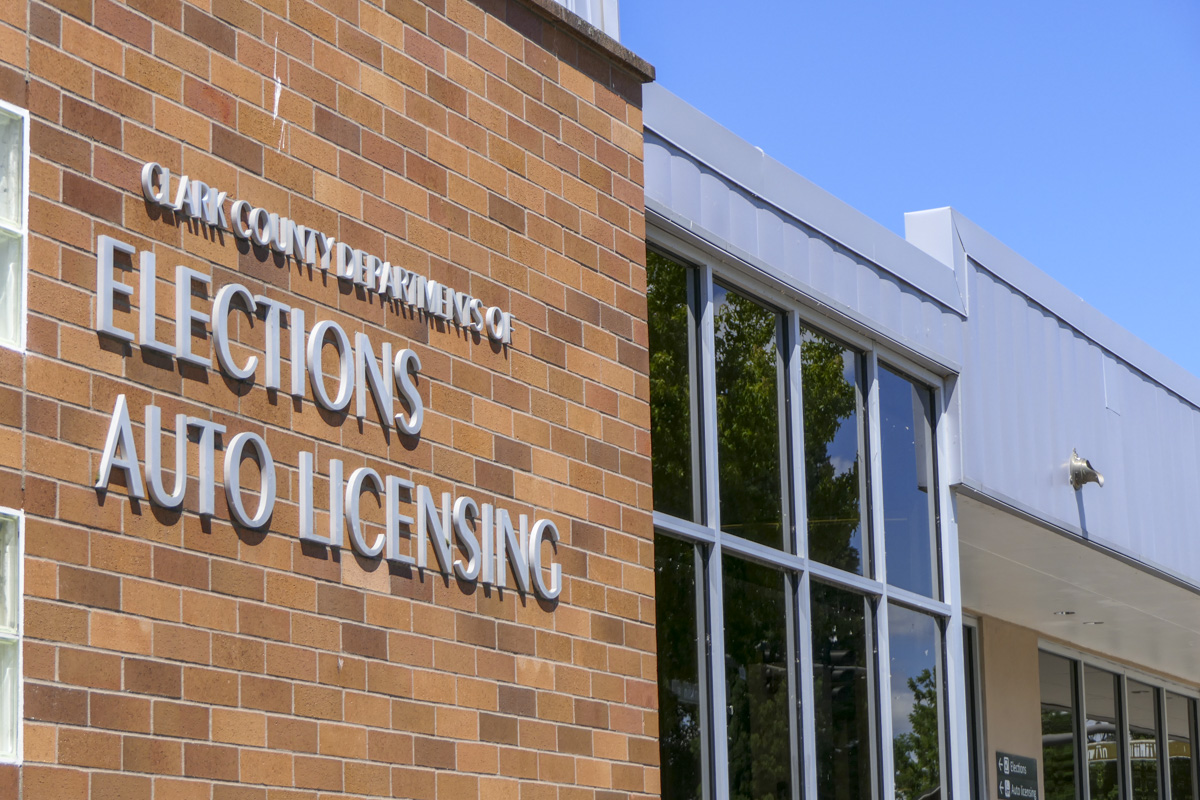
Just as was the case in the August primary election, Democrats controlled the majority of races around Clark County in Tuesday’s general election.
The Clark County Elections Department released the initial results of the Nov. 3 general election Tuesday night, revealing an emphatic Blue Wave throughout Clark County.
Tuesday’s initial results included a turnout of 169,598 of the 363,192 voters (46.70 percent). The results will be updated each day. For more information, visit Elections | Clark County.
Here’s a look at some of the higher profile races in Tuesday’s elections:
Legislative races
In the 17th, 18th and 49th Legislative Districts, Clark County voters overwhelmingly supported Democrats in all six races. In the last two years, Republicans held both positions in the 17th and 18th Districts while Democrats held the two seats in the 49th District. The 17th District also includes Skamania County voters.)
In the 17th Legislative District Clark County voters preferred the Democrats in both races by very similar 58-42 margins. In the Position 1 race, Democrat challenger Ben Christly received 58.14 percent of the Clark County votes (26,789) and Republican incumbent Kevin Waters has 41.86 percent (19,285). District-wide results showed Christly and Perez leading by similar 56-43 (percent) margins.
In the Position 2 race, Democrat challenger and Vancouver City Council Member Diana Perez Diana H. Perez has 58.27 percent of the Clark County votes (26,882) and Republican incumbent David Stuebe has 41.73 percent (19,251).
In the 18th Legislative District Position 1 race, Democrat Randi L. Knott has 54.25 percent of the votes (28,922) and Republican incumbent Stephanie McClintock has 45.75 percent (24,393). In the Position 2 race, Democrat Deken Letinich has 55.89 percent of the votes (29,719) and Republican incumbent John Ley has 44.11 percent (23,457).
In the 49th District race for Position 1, Vancouver City Council Member Kim Harless received 70.60 percent of the votes (30,170) while Republican Sarah Mittelman received 29.40 percent (12,566 votes). In the race for Position 2, incumbent Monica Jurado Stonier has received 72.53 percent of the votes (30,850) and Republican challenger Derek Thompson received 27.47 percent (11,684).
Clark County Council races
Three races on the Clark County Council were on the ballot for Tuesday’s general election. Races for County Council are considered to be nonpartisan.
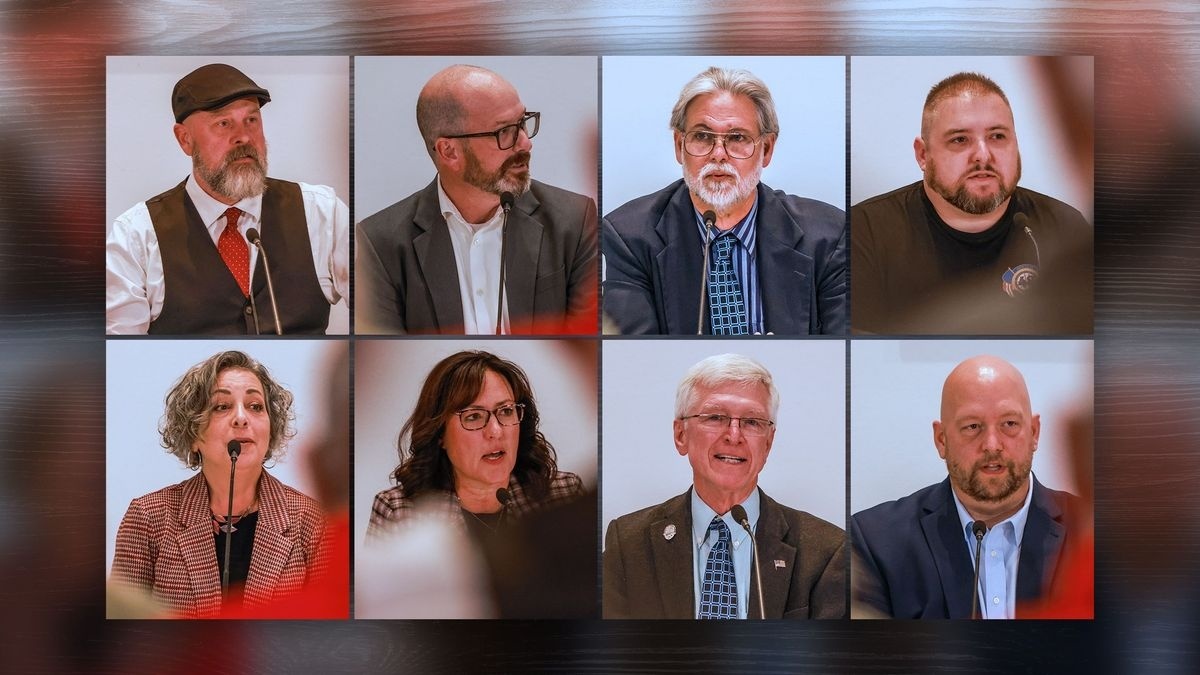
In District 1, current County Councilor Glen Yung was challenged by Bryan Shull. Yung has a comfortable lead with 64.48 percent of the votes (16,096) compared to Shull’s 35.52 percent (8,866).
In District 2, current Councilor Michelle Belkot was challenged by John Zingale. Belkot is holding a slim lead after the initial results, receiving 51.62 percent (15,801) of the votes counted thus far. John Zingale has 48.38 percent of the votes (14,811).
In District 5, current County Chair Sue Marshall did not seek re-election. Peter Silliman and Troy McCoy were seeking the position. Tuesday’s initial results show McCoy with 53.77 percent (19,065) and Silliman has 46.23 percent (16,393).
County offices
Longtime Auditor Greg Kimsey chose not to seek re-election. Mitchell Kelly, a current deputy auditor, and former Clark County Chair Eileen Quiring O’Brien advanced from the field in the August primary election. In Tuesday’s initial results, Kelly has 56.52 percent (86,006) of the votes and Quiring O'Brien has 43.48 percent (66,159).
Current County Clerks Scott G. Weber appears to be retaining his position with 60.12 percent of the votes (87,993). Challenger Rachel Shapiro has 39.88 percent (58,361).
Current Assessor Peter Van Nortwick will also retain his position. He has 72.36 percent of the votes (106,901) and challenger Tyler Thoune has 27.64 percent (40,835).
Charter amendments
There were nine proposed amendments to the Clark County Charter on the general election ballot. Eight of those amendments were being passed overwhelmingly (with at least 60 percent of the votes) by Clark County voters. The long amendment that was failing was Amendment 26, which would This would reduce the number of signatures necessary for initiatives and referendums from 10 percent to 8 percent, remove calculation requirements of required signatures based on the number of votes cast, permit the Auditor’s Office to limited use of statistical sampling, and more.
Just under 60 percent of the voters rejected the proposed amendment.
Comments
Loading comments…