
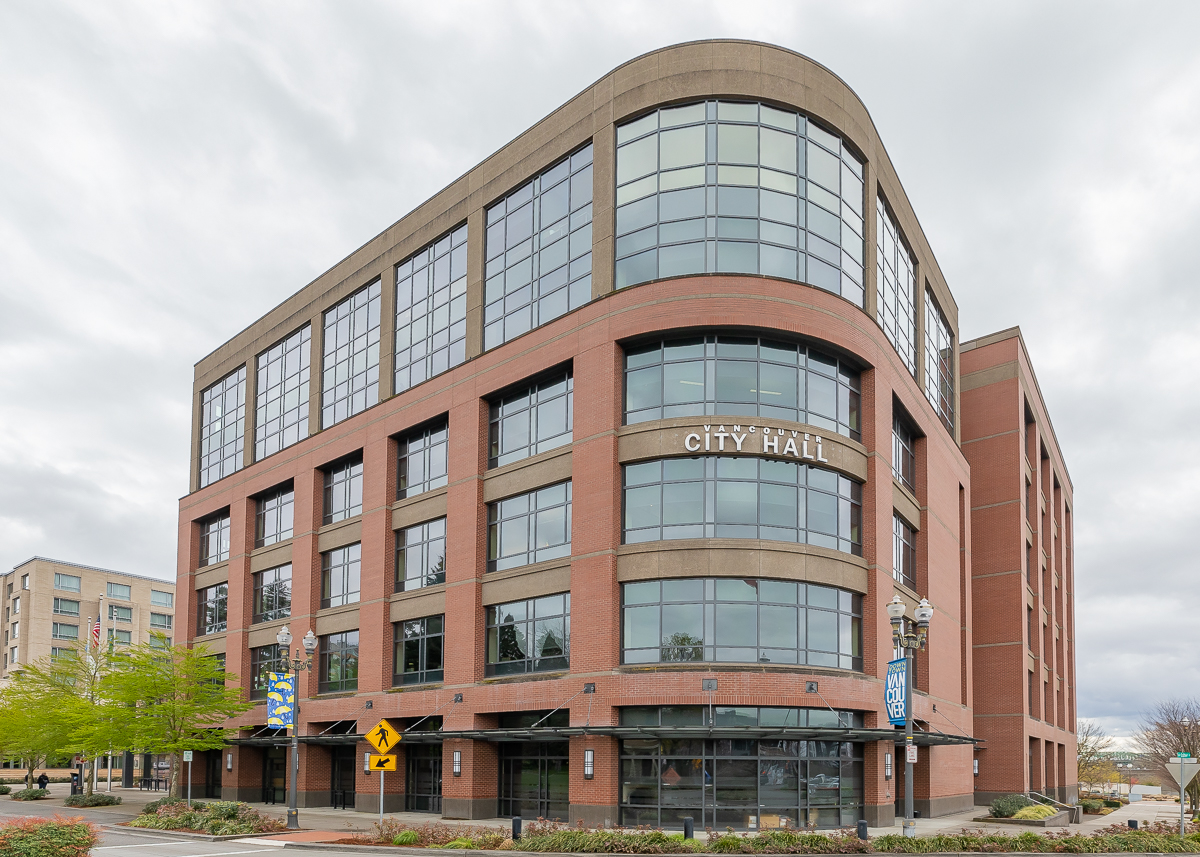
VANCOUVER – On Monday (Oct. 26), the Vancouver City Council is set to consider City Attorney Nena Cook's Oct. 20 memorandum recommending dismissal of the ethics complaint against Council Member Diana Perez (currently listed as Item 13, but subject to change). On Friday, the complainant – Rob Anderson – put the city attorney and council on notice that he will seek relief available under Washington law if the memo is presented to council in its current form, or if council acts on it. Anderson is the founder of Reform Clark County.
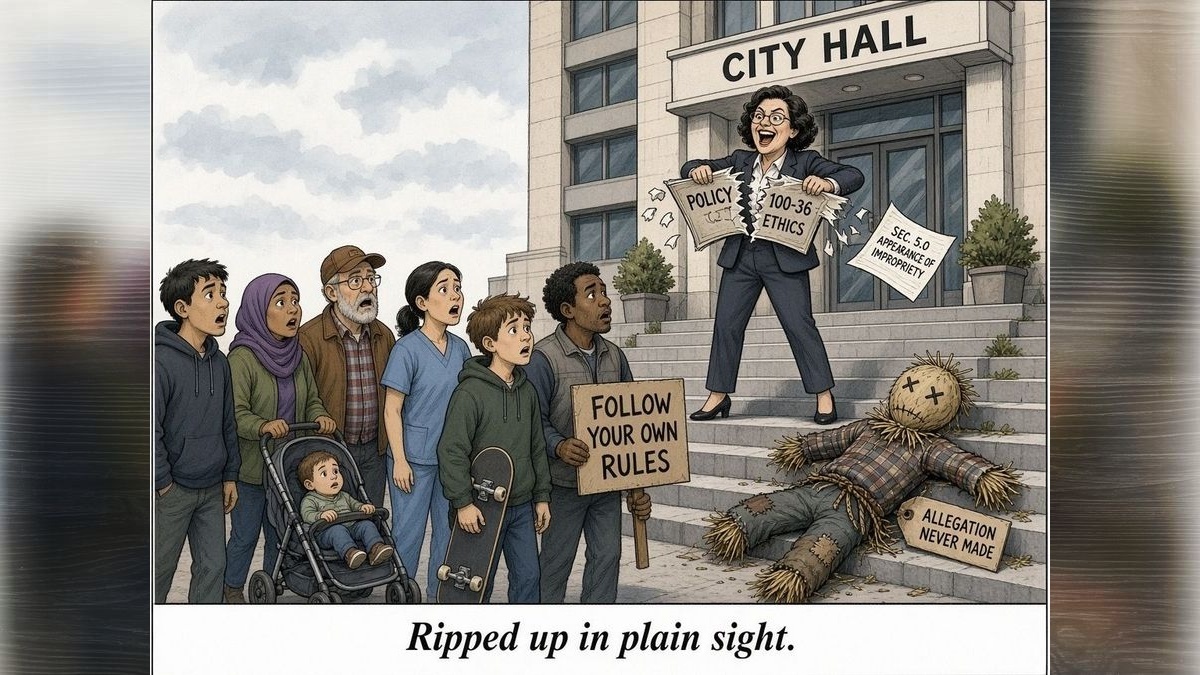
In his letter, Anderson calls the memo "a gross misrepresentation of the complaint I actually filed, produced by actions Policy 100-36 does not allow." He wrote that it "must be withdrawn or corrected before Council acts."
Anderson contends the following:
It goes beyond the City Attorney's authority. Section 9.0 of Policy 100-36 gives the city attorney one narrow task: to determine whether the complaint, "on its face, alleges facts that, if true, would substantiate a violation." Investigation belongs to an outside investigator. Instead, the memo gathers Secretary of State filings, relies on Perez's own account of where her loan came from, and, as The Columbian Newspaper reported, "verified" that account. "Verification is investigation," Anderson wrote.
It addresses one allegation and ignores the rest. The memo lists every provision the complaint cites: Sections 5.0, 6.0(B), 6.0(F), 6.0(G), and the federal CDBG conflict rule, 24 CFR 570.611. It then analyzes just one question, whether Perez had an interest in "the $100,000 contract." The appearance-of-impropriety allegation under Section 5.0 gets no analysis at all. "If, on their face, all allegations are accepted as true, how could this not justify, at the very least, an Appearance of Impropriety investigation and hearing?" Anderson wrote. He calls the memo "a narrowly targeted, unauthorized investigation, aimed to disprove an allegation I never made, while wholly ignoring the allegations I did make."
It misrepresents the complaint. The memo spends a page and a set of exhibits refuting a claim Anderson never made: that Perez co-owned the café when she moved to fund Fourth Plain Forward (FPF) in May 2025. The actual allegation is that, after voting to fund FPF, Perez got a loan, a realtor referral, and other help for her own business from FPF, an organization built in significant part with City CDBG money. FPF's own website says, "Our services are supported by the City of Vancouver and Clark County." The memo never mentions it.
It refuses to take the supplemental as true. The memo says the October 12 Supplemental is part of the complaint. Then it ignores two of the Supplemental's allegations. The first is that county CDBG contracts exclude Vancouver businesses, so any FPF help Perez got had to be city-supported. The second is that her reported income is above the federal low- and moderate-income limit. The memo also never addresses her September 21, 2026 vote on FPF's CDBG results report to HUD, cast without disclosure or recusal, or the $2,500 FPF micro-grant to the café's owners that she disclosed after the memo was issued.
Anderson asks that the memo be withdrawn or corrected, that every cited provision be evaluated on its face, and that council decide on referral to an outside investigator based on a proper memo, with Perez not participating. "The public is entitled to a process that follows the Policy," he wrote, "not one that shields a sitting Councilmember."
The Vancouver City Council meets Monday, October 26, at 6:30 p.m. at City Hall. Written comments and online sign-up for Item 13 close at noon Monday.
About Reform Clark County: Reform Clark County is a citizen watchdog group focused on transparency and ethics in local government.
The following email “Notice of Intent to Seek Judicial Relief: Perez Ethics Complaint Memorandum (Oct 26 Agenda Item 11) was sent October 23, 2026 at 1:27 PM:
Dear Ms. Cook:
I have reviewed your October 20, 2026 memorandum recommending dismissal of my ethics complaint against Councilmember Diana Perez, set for Council on October 26 as Item 11. If this memorandum stands, Council will act on a gross misrepresentation of the complaint I actually filed, produced by actions Policy 100-36 does not allow. It must be withdrawn or corrected before Council acts.
The purpose of this letter is to put the Council and City Attorney on notice that I intend to seek judicial relief, by Writ of Mandamus, injunctive relief or other means allowable by Washington law, if either entity takes further official action on this memorandum in its current form (either the October 26 presentation of it by the City Attorney for Council's consideration and action or the Council acting on it) for the reasons set forth below.
The memorandum exceeds the authority Policy 100-36 grants and does not address all ethical violations alleged.
Section 9.0 gives the City Attorney one narrow task: to "determine whether the complaint, on its face, alleges facts that, if true, would substantiate a violation," and recommend referral or dismissal. Investigation belongs to "the outside investigator," who "shall conduct an investigation of the complaint and prepare written findings and conclusions." The memorandum instead gathers outside Secretary of State filings (Memo p. 4, exhibits), relies on Councilmember Perez's own account of the loan's source (Memo p. 3), and, as The Columbian reported, "verified" that source. Verification is investigation.
The memorandum lists the provisions my complaint invokes: Sections 5.0, 6.0(B), 6.0(F), 6.0(G), and 24 C.F.R. § 570.611 (Memo p. 2). It then analyzes only one question: whether she had an interest in "the $100,000 contract" (Memo pp. 2, 4–5). The memorandum is void of any discussion or analysis on any other violation alleged.
Basing its recommendation on the analysis of one cherrypicked allegation, while wholly failing to address the others, does not satisfy the City Attorney's duty in this process. One example among many available here: Where is the analysis on the Section 5.0 allegation?
5.0 Avoidance of the Appearance of Impropriety
"All members of the City Council should conduct their official duties with integrity and impartiality and in a manner that avoids even the appearance of impropriety or a conflict of interest between public duties and private interests."
The memorandum wholly lacks any analysis on this issue. If, on their face, all allegations are accepted as true, how could this not justify, at the very least, an Appearance of Impropriety investigation and hearing?
That is just one of the alleged violations left unaddressed by the memorandum. As a result, the memorandum is neither a facial nor comprehensive review of the alleged violations. It is a narrowly targeted, unauthorized investigation, aimed to disprove an allegation I never made, while wholly ignoring the allegations I did make. In its current form, the memorandum does not come close to satisfying the City Attorney's responsibilities and duties set forth in Policy 100-36.
The memorandum misrepresents the complaint.
The memorandum states that my complaint alleges Councilmember Perez "was a co-owner and Governor of the Kit-Tea Café when, on May 12, 2025, she moved to approve" Resolution M-4337 (Memo p. 2; see p. 4). My complaint says no such thing. It states that she is a co-owner and faults her for failing to disclose "any personal interest in FPF or her private business plans" (Complaint p. 2). The memorandum then spends a page and a set of Secretary of State exhibits refuting an allegation I never made.
The memorandum also turns my complaint into a dispute over which account the loan dollars came from. That is not the test my complaint invokes. The violation is that Councilmember Perez obtained a loan, a realtor referral, and other assistance for her own business from Fourth Plain Forward (FPF), an organization whose "capacity to provide loans and technical assistance has been built and sustained in significant part by public funds, including City of Vancouver CDBG awards" that she moved and voted to approve (Complaint pp. 2–3, 5). Your own memorandum concedes that the café "received a construction loan from Fourth Plain Forward" (Memo p. 1). FPF's Executive Director has confirmed in writing that "FPF provided a loan to Ms. Perez's business and her business partners in 2026." In her own words: "Without Fourth Plain Forward, we would not have been able to be where we're at." The memorandum never asks whether her business received FPF's CDBG-funded services, or whether it was among the "240 micro enterprises" it credits to that funding (Memo p. 3).
FPF answers that question itself. Its own website tells the public: "Our services are supported by the City of Vancouver and Clark County" (FPF Business Connect page, retrieved October 23, 2026; Exhibit A). By FPF's own account, the business services it offers, including coaching, technical assistance, and funding support, are City-supported. The memorandum never mentions this.
The memorandum declares the Supplemental part of the complaint, then refuses to take it as true.
The memorandum states that "[t]he Supplemental Materials are considered part of the Complaint" (Memo p. 1). My October 12 Supplemental alleges that the County's CDBG contracts with FPF exclude businesses inside the City of Vancouver, so "any loan or technical assistance she received from Fourth Plain Forward must have been supported by the City of Vancouver's own CDBG award to FPF." It also alleges that her F-1 reports income well above the low- and moderate-income limit that governs CDBG microenterprise assistance (24 C.F.R. § 570.208(a)(2)(iii)). The memorandum addresses neither allegation. Instead it declares that "the Complaint establishes that her business received a construction loan from the Department of Commerce" (Memo p. 5). The complaint, read with the Supplemental as you say it must be, establishes the opposite. A facial review that takes the allegations "as true" (Memo p. 4) cannot resolve the central disputed fact against the complainant.
Facts a facial review must take as true:
- On May 12, 2025, Councilmember Perez made the motion and voted to award $100,000 in City CDBG funds to FPF for "small business education and technical assistance providing businesses with access to services" (Complaint p. 2).
- FPF's CDBG microenterprise services include "access to loans and other sources of capital" (County–FPF CDBG contract § 3.1.9, Supplemental).
- That assistance is limited to low- and moderate-income owners (24 C.F.R. § 570.208(a)(2)(iii)). Her F-1 reports income well above that level (Supplemental).
- She became a governor of the café effective October 17, 2025, as your own exhibit shows (Memo p. 14). As an owner, she obtained a loan through FPF and other FPF assistance, including a realtor referral (Complaint pp. 2–3, 5). The Reflector article you cite reads, "Through Bridge City Contracting, they referred us" (Complaint p. 48). It does not establish that FPF had no role.
- On September 21, 2026, as an owner, she voted to approve submission of the CAPER, FPF's CDBG results report to HUD, without disclosure or recusal (Complaint p. 3). The memorandum dismisses this because the vote "did not approve any additional spending" (Memo p. 3). Policy 100-36 does not limit recusal to spending votes. Section 6.0(F) bars a Councilmember from benefiting "directly or indirectly from any legislation" or participating "in discussion with or give an opinion on such legislation." Section 5.0 requires avoiding "even the appearance of impropriety," judged by what "a reasonable person, with knowledge of the relevant facts" would conclude. A Councilmember approving a report that may count her own business among the program's results is exactly that appearance.
- Supplemental fact, disclosed by Councilmember Perez after your memorandum was issued: in June 2025, one month after her vote, FPF gave the café's owners a $2,500 micro-grant. A grant that builds the business benefits everyone who later owns it. This fact warrants investigation, not dismissal.
Requested action.
I request that the memorandum be withdrawn or corrected; that the complaint and Supplemental be evaluated as written under Section 9.0, with each cited provision addressed, on its face, without unauthorized investigatory conclusions; and that Council decide whether to refer to an outside investigator based upon a properly constructed memorandum, with Councilmember Perez not participating. If the City will not apply Policy 100-36 as written, or presents this memorandum to the Council in its current form on October 26, or the Council chooses to take action on this improper memo, I will seek a writ of mandamus under RCW 7.16.160, injunctive relief and any other appropriate relief available by Washington law. The public is entitled to a process that follows the Policy, not one that shields a sitting Councilmember by unilaterally settling the central disputed facts, addressing only one alleged violation from many, and seeking expedient closure to quickly dispose of this matter.
Sincerely,
Rob Anderson
Exhibit A: Fourth Plain Forward, "Business Connect" web page (www.fourthplainforward.org/business-connect), retrieved October 23, 2026.

Comments
Loading comments…