The I-5 Bridge replacement proposal fails to address people’s biggest concerns, reducing traffic congestion and saving time
Last Friday, U.S. Congresswoman Marie Gluesenkamp Perez and U.S. Congressman Dan Newhouse invited new U.S. Department of Transportation Secretary Sean Duffy to come to the Portland-Vancouver metro area to view the Interstate Bridge Replacement (IBR) project and learn about its importance to the region. Washington state Rep. John Ley, R-Vancouver, who serves the 18th Legislative District, issued the following statement:
“This is nothing more than an overpriced light rail project in search of a bridge. The $2 billion transit component is over one-quarter of the entire cost. The people do not prefer the current ‘locally preferred alternative’ as residents on both sides of the river oppose the project.
The proposal fails to address people’s biggest concerns, reducing traffic congestion and saving time. Portland has the nation’s seventh-worst traffic congestion, and the project administrators admit that morning travel times will double by 2045. The southbound commute from Salmon Creek to the Fremont Bridge will take at least 60 minutes, up from 29 minutes today. That’s unacceptable to the citizens of Southwest Washington.
The U.S. Coast Guard finds the project to be a bridge too low. They want the bridge to have unlimited clearance for marine traffic, which would be offered by either a tunnel or a bascule bridge. However, they will consider one with the current 178 feet of clearance for maritime vessels.
Additionally, the current proposal allocates 54 percent of the bridge surface to transit, bikes, and pedestrians, and only 46 percent to freight haulers and general-purpose traffic. I’m not aware of any interstate freeway in the nation that focuses more on ‘active transportation and transit’ instead of cars and trucks.
Last November, I sent a 20-page letter to outgoing USDOT Secretary Pete Buttigieg outlining the project’s significant problems. A copy of that letter was hand-delivered to Congresswoman Perez’s office in Vancouver. I have not received a response to the people’s significant concerns.
Today, I sent Secretary Duffy my own letter, signed by some of my colleagues from Southwest Washington—Rep. Ed Orcutt of the 20th District and Rep. Jim Walsh of the 19th District—seeking a meeting to highlight the people’s concerns with the project.
I hope the Secretary will give Washington and Oregon elected officials an opportunity to share their concerns about the current proposal. I believe the Department of Government Efficiency, led by Elon Musk, should scrutinize the project.
I welcome the opportunity to meet with Secretary Duffy and share the significant concerns we and many citizens have about the $7.5 billion project.”
The 2025 legislative session began on Jan. 13 and will last 105 consecutive days.
Information provided by the Washington State House Republicans, houserepublicans.wa.gov
- Goodbye, bumpy ride on I-5 in Vancouver
 Three coordinated WSDOT projects will improve more than 6 miles of I-5 in Clark County, backed by a $25 million investment.
 - Nighttime work on I-5 between Ridgefield and Woodland will replace damaged concrete panels Sept. 14-19
 Granite Construction will close right and center lanes nightly on I-5 between mileposts 9.5 and 21.5 through Sept. 19.
 - County seeks volunteers to serve on the Bicycle and Pedestrian Advisory Committee
 Clark County seeks two volunteers, including one youth member, for its Bicycle and Pedestrian Advisory Committee; deadline is Oct. 11, 2026.
 - Washington Rep. John Ley warns ballooning bridge budget needs reality check
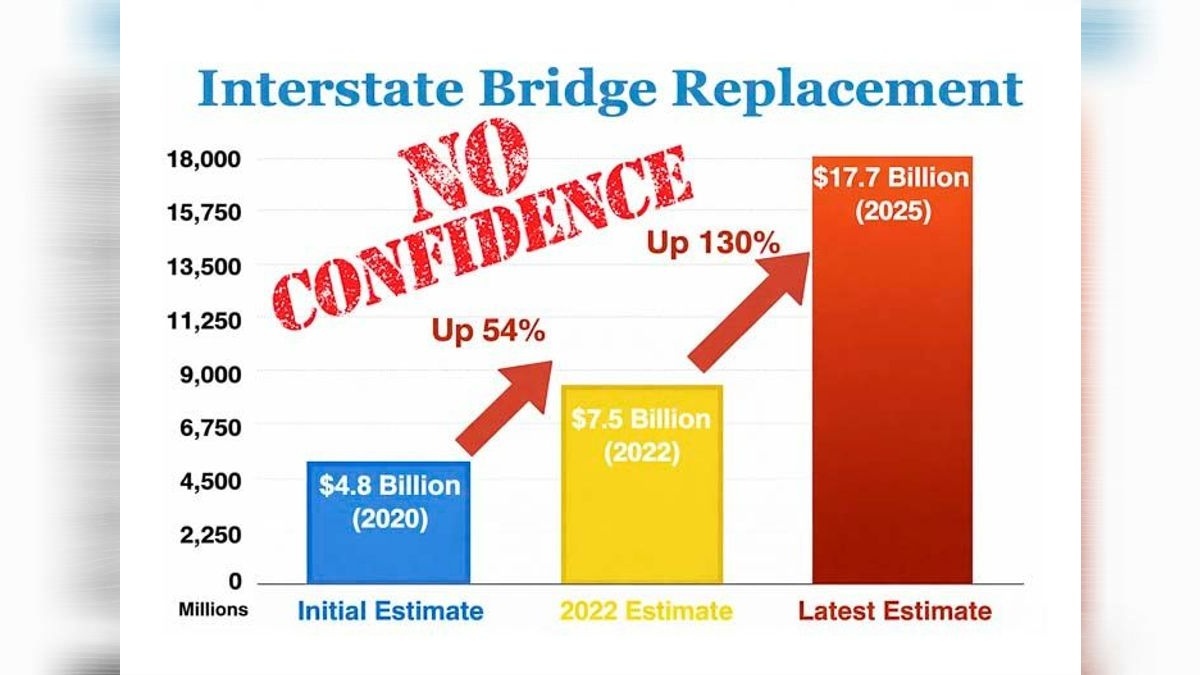
 Rep. John Ley says the IBR ballooned from a $44M contract to a $13B–$15B project, with phase one still $2.2B short.
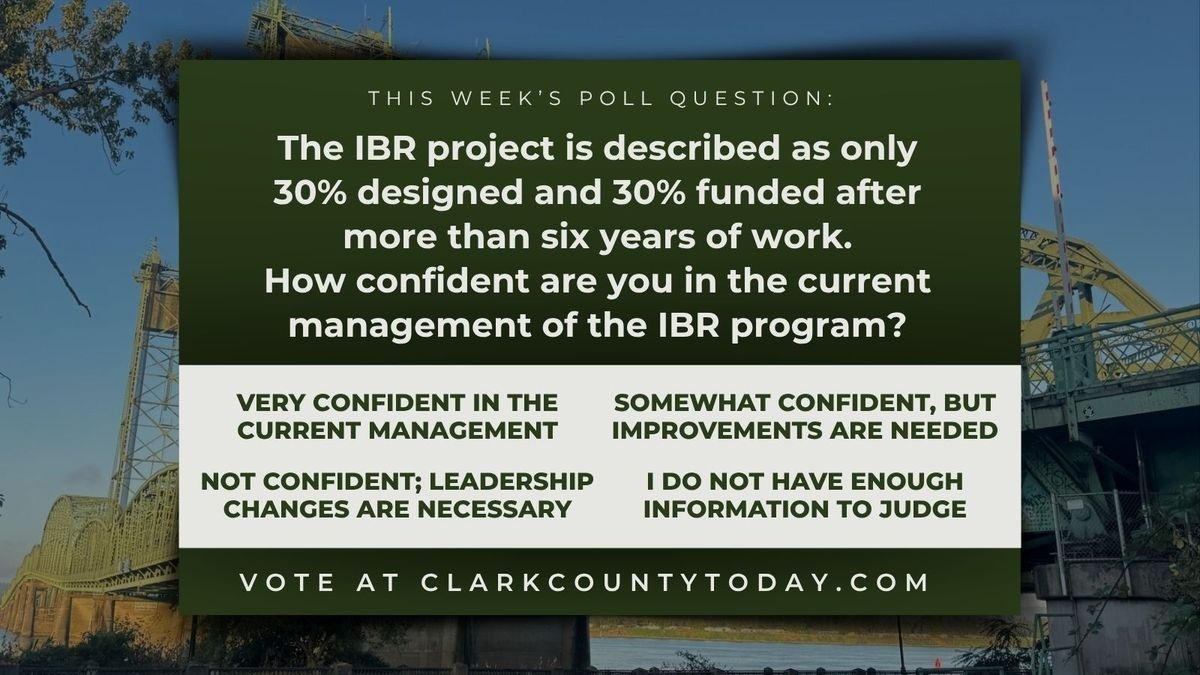
 - POLL: The IBR project is described as only 30% designed and 30% funded after more than six years of work. How confident are you in the current management of the IBR program?
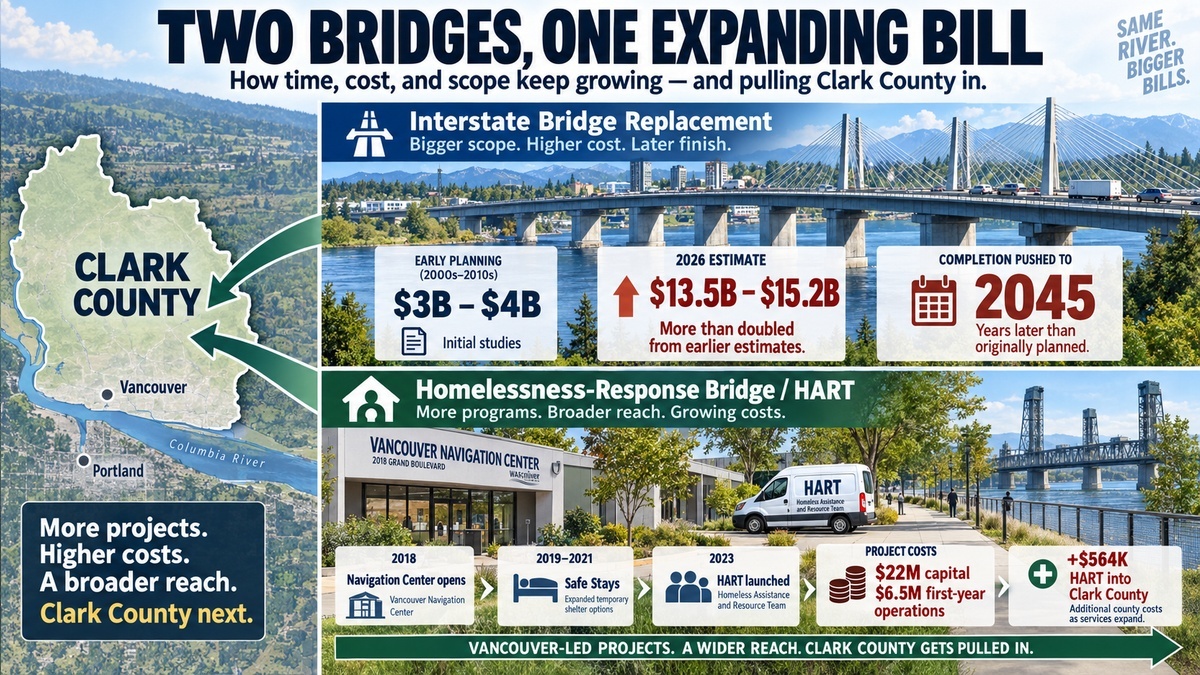
 IBR’s cost has climbed from $3.2–$4.8B to $15.2B while the project remains 30% designed and 30% funded.