


Candidates in Washington state’s most closely watched congressional race have spent more than $10 million entering the final weeks of the campaign.
Meanwhile, outside forces are shelling out nearly twice as much to sway voters in the 3rd Congressional District contest that will help decide which political party controls the U.S. House in 2027.
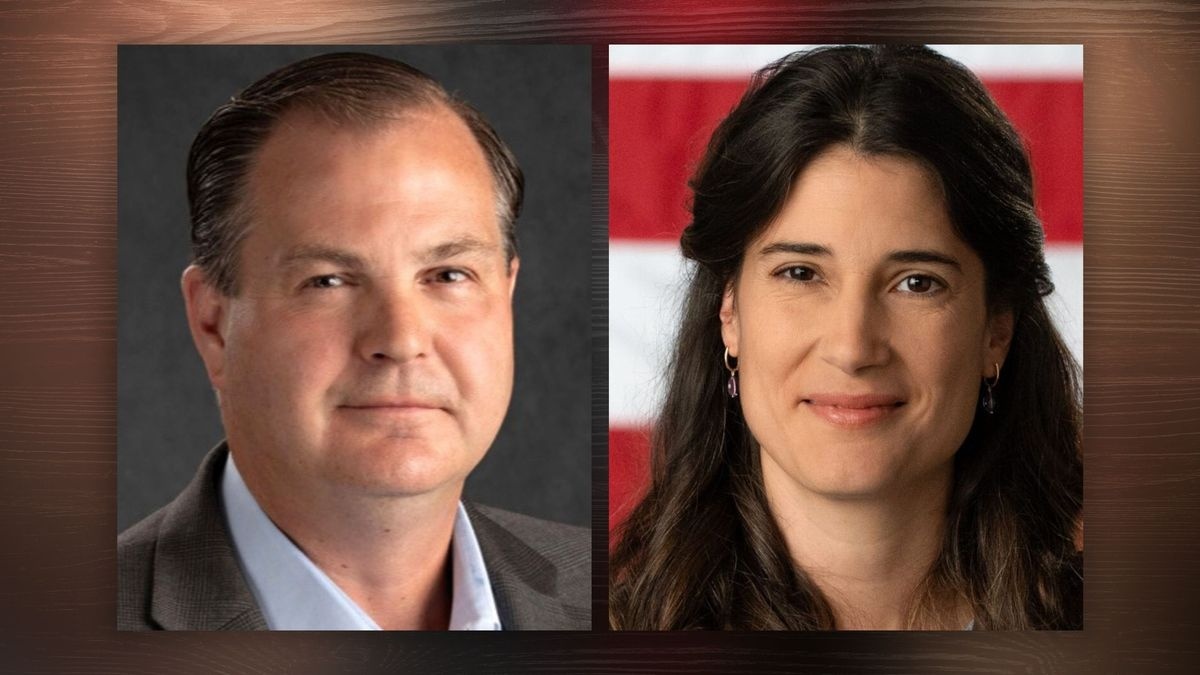
Democratic U.S. Rep. Marie Gluesenkamp Perez, who is pursuing a third term, has raised $8.8 million and began October with roughly $640,000 on hand, according to filings with the Federal Election Commission.
Her opponent, Republican state Sen. John Braun, has hauled in $3.2 million and started October with $1.1 million available.
Large sums are getting poured into the race by Democratic and Republican organizations, and an array of political committees, at least one tied to President Donald Trump.
Collectively they have committed in excess of $15 million on advertising, mailers, text messages, phone calls and direct outreach to voters in Clark, Cowlitz, Lewis, Pacific, Wahkiakum and Skamania counties, and a touch of Thurston County.
Though much of that sum has been spent, groups on both sides of this electoral battle are reserving air time for television ads leading up to the Nov. 3 election.
They’re dumping money into this one race in the southwest corner of the state because of the stakes. With Republicans outnumbering Democrats in the U.S. House by a slim margin, 218-214, the two parties are competing hard in close races, and recent polling shows the two candidates deadlocked.
As evidence of the importance, House Speaker Mike Johnson, R-Lousiana, will be in Washington on Wednesday to join Braun at a campaign rally.
This is viewed as a Republican-leaning district as Trump won it in all three of his campaigns for president. But the GOP lost the congressional seat in 2022 when Gluesenkamp Perez, co-owner of an auto repair and machine shop and a Democratic newcomer, beat Republican Joe Kent, a former Army Special Forces soldier who Trump backed.
She defeated Kent in a rematch in 2024 even with Trump on the ballot.
As of early October, Gluesenkamp Perez has been the target of around $11 million in direct opposition spending based on a review of federal election records.
Of the total, the Congressional Leadership Fund, a super PAC dedicated exclusively to electing Republicans to the U.S. House of Representatives, expended $4.8 million.
No Going Back, a political action committee aligned with Trump’s MAGA Inc., had spent roughly $3.9 million opposing Gluesenkamp Perez, plus about half-a-million dollars boosting Braun’s candidacy.
The American Action Network has shelled out $1 million. And the National Republican Congressional Committee and Braun campaign have jointly spent roughly $2.6 million, most of it taking aim at the incumbent.
“The level of outside spending in this race has been obscene,” said Tim Gowen, Gluesenkamp Perez’s campaign manager. “Republican groups, including Trump’s own super PAC, have spent more than $10 million on deceptive negative ads — more than double what groups supporting Democrats have spent.”
Records show Braun has been the target of $4.3 million in spending by the House Majority PAC, the super PAC focused on electing Democrats to the House. The Democratic Congressional Campaign Committee and Gluesenkamp Perez campaign have jointly spent $2.6 million in opposition ads.
A Braun campaign spokesperson did not immediately respond to a request for comment.
This report was first published by the Washington State Standard.


Comments
Loading comments…