
Takeaways:
- W2 workers are getting another pay decrease in 2027, compliments of the state.
- The PFML payroll tax rate is rising to 1.2% of wages.
- PFML is no safety net. It often benefits people who are not in need of taxpayer dependency at the expense of other workers, including low-income workers.

Elizabeth New
If you’re a W2 worker in Washington who looks at your paystubs, you’re used to state-mandated deductions to your paycheck for programs you may never need or use. And in 2027, the amount workers pay so other workers can take paid leave for medical reasons or family bonding will increase. Never mind that some employers already offer paid time off or that workers have many other needs – housing, fuel, groceries, childcare, vehicle breakdowns, etc. State lawmakers have chosen which needs will be prioritized and funded by all W2 employees.
The payroll tax for Paid Family and Medical Leave (PFML) will rise to 1.2% of gross wages in 2027. (Up to 70.7% of that can be taken directly from workers, with 29.3% coming from the employers of 50 or more on workers' behalf).
The 1.2% rate is triple the program’s starting rate of 0.40% in 2019 and a 6.2% increase from last year. This new rate of 1.2% is also PFML’s current statutory cap — a cap that some lawmakers say they want to bust. Expect discussion about the cap rising even higher in the coming legislative session. Lawmakers have been talking about it for a few years.
Legislators should be discussing repeal of this misguided program or at least benefit-side changes to it, instead. Sen. Curtis King, R-Yakima, has suggested several of them, including my favorites — ending repeat use of PFML and limiting the duration of benefits.
Why do some leaders want workers giving even more of their wages to the program? Because even the 1.2% is not projected to keep the program solvent. There is simply too much demand for other people’s money. This should be no surprise. Even people who don’t have a qualifying medical need or new addition to the family that makes them eligible for paid time off might be receiving program benefits. Oversight and program integrity are lacking.
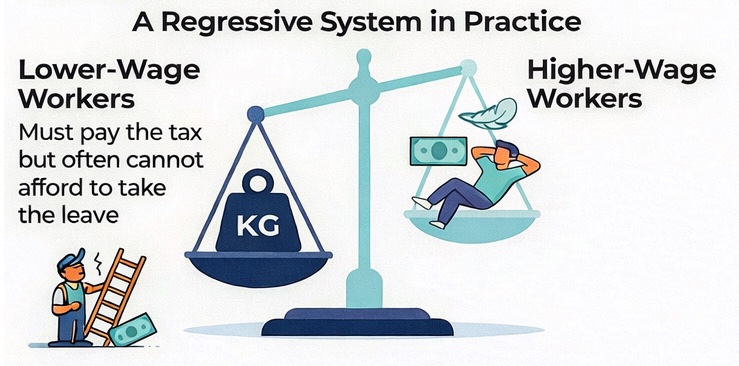
In my recent PFML analysis, I explain how PFML is not the safety net many people were sold. Lower-wage workers use the program less, while middle- and higher-wage workers account for a larger share of claims. In fiscal year 2026, workers making $61 or more an hour accounted for 19% of PFML claims, compared with 8% for workers in the lowest wage group — more than twice the share.
The program was not sustainable at its 0.40% tax rate. It’s not expected to be sustainable at a tax rate three times as high. Lawmakers should consider benefit-side changes instead of rate increases.
Better yet, this payroll tax that harms the majority of workers in the state should be repealed. We could handle the transition with care for people currently relying on benefits, and the treasure chest of money that’s already been collected for PFML could be used to fund true safety nets.
Elizabeth New (Hovde) is the director of the Centers for Health Care and Worker Rights at the Washington Policy Center. She is a Clark County resident.


Comments
Loading comments…