
Editor’s note: Clark County Today has reached out to all six candidates vying for three seats on the Clark County Council. We asked about light rail, homelessness, and taxes/budgeting.
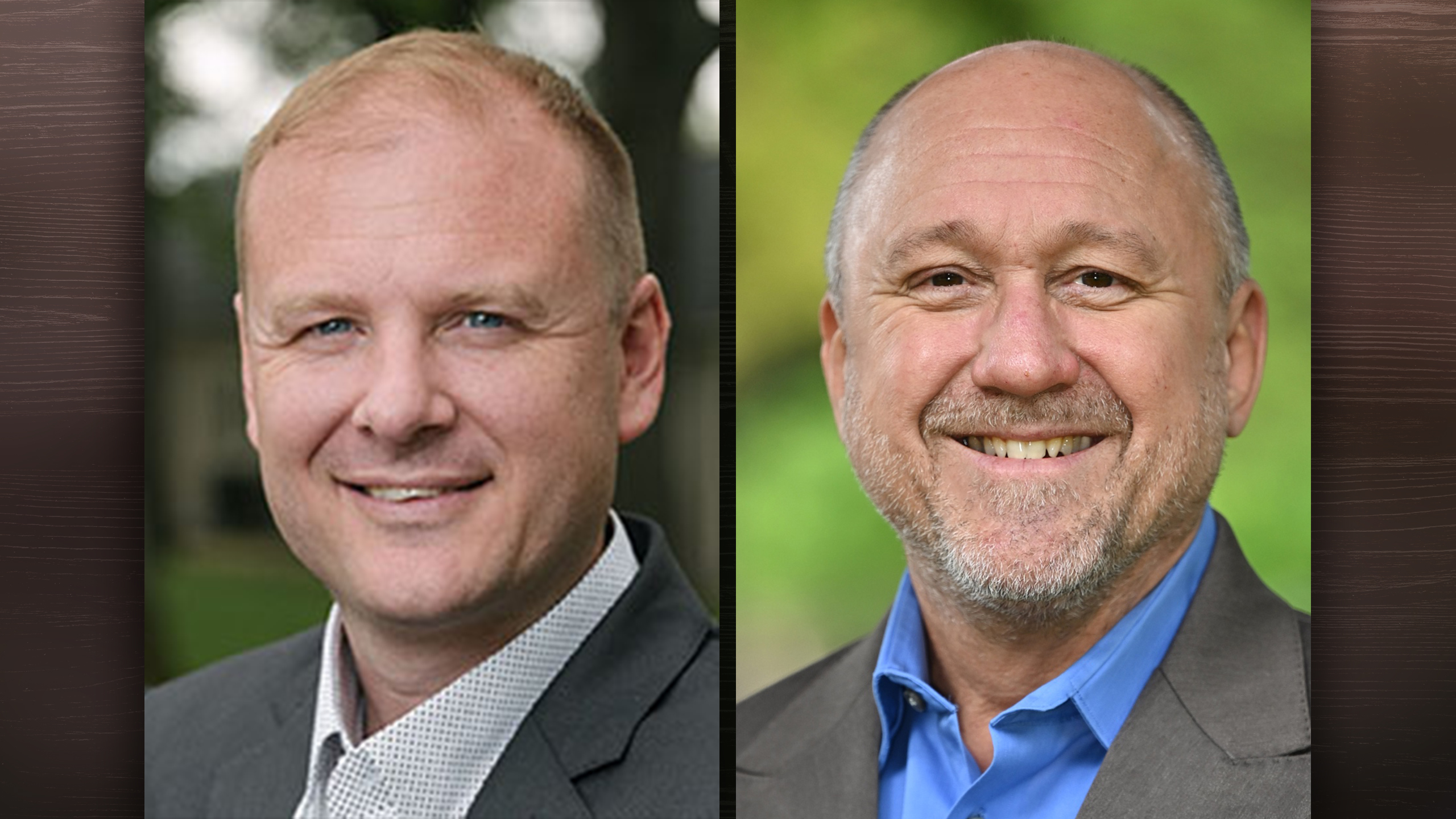
In this installment of our series, we look at the race for Clark County Council District 1, featuring incumbent Glen Yung vs. challenger Byran Shull.
Light Rail/IBR
Clark County Today: Light rail remains a hot topic. Three Clark County Councilors are on the C-TRAN Board of Directors and would likely be voting on any negotiations/deals with TriMet for operations and maintenance costs if light rail does come to Clark County. With that said …
What is your position on the extension of light rail from Portland to Vancouver via the Interstate Bridge Replacement Program? If you support it, can you share with us why you think it is important for all of Clark County? If you do not support light rail, what would you say to those who want light rail?
Shull: “I am opposed. We have an existing bus system that is underused, one that is currently expanding services and routes to increase access through our important commercial corridors, and that already connects with the TriMet system across the river. We simply cannot justify the expense, or more importantly, afford the price tag without additional significant tax increases.
“Our current examples of leadership in this sector are TriMet, which appears failing on many metrics, Sound Transit, which has consistently ballooned expenses and retracted promises of deliverables, and (California) high speed rail, which seems to be a real-life version of a Simpsons cartoon boondoggle.”
Yung: “I believe light rail can be an excellent transportation tool, and I've been on the record supporting the Interstate Bridge Replacement Project. That doesn't mean I'm happy with how expensive this project has become.
“I've long believed that our region desperately needs a third bridge across the Columbia River. Frankly, I would have preferred that we prioritize a third crossing before replacing the I-5 bridge.
But we also have to deal with the political realities of getting these projects built. Based on the information available to me and the many conversations I've had, it's my firm belief that we will not get a third crossing until the I-5 bridge is replaced. I simply don't see a realistic path to making that happen first.
“I understand why people are frustrated with the cost of light rail in this project. I share many of those concerns. But I also believe that removing light rail at this point could jeopardize the entire bridge replacement project, which would put us even further behind in addressing our region's transportation needs.
“We need a third crossing, and I believe moving the I-5 bridge replacement forward is a necessary step toward making that happen.”
Clark County Today: If light rail is definitely coming to Vancouver, who should pay for operations and maintenance for light rail into Vancouver? Should it be the city of Vancouver, or should all Clark County help foot the bill? Or simply TriMet?”
Shull: “Operation and Maintenance costs will have to be borne by the owners of the system, whomever that ends up being. If (that’s) Clark County residents through C-TRAN, then we should all be made aware of the costs. Unfortunately, we cannot trust the financial and projections coming out of our experts any longer. They have shown no interest in honesty or integrity throughout this multi-year process. The consultant hired to help us through the process contracted a 32-percent profit margin, baked in. That is preposterous and indicative of a corrupt process unworthy of public trust.”
Yung: “My priority is making sure C-TRAN and Clark County taxpayers are adequately protected. We should only be responsible for our clearly defined and reasonable share of the costs associated with providing light rail service into Vancouver. We should not be responsible for subsidizing TriMet's broader financial problems or covering excessive costs that we have little control over.
“I support exploring a geographically limited sales tax that would apply to the communities that stand to benefit most directly from light rail, rather than asking the entire county to pay for it. Ultimately, any such sales tax would have to be approved by the voters in the affected area. I believe those voters should have the final say on whether they're willing to fund the service.
Clark County Today: Would you be supportive of another advisory vote for Clark County residents regarding light rail? Why or why not?
Shull: “How many times do we need to survey the citizens before we believe them when repeatedly saying NO to light rail? I do not think we need to insult the voters with another attempt. We have become weary and suspicious that the vote would continue to be ignored.”
Yung: “No. Advisory votes can cost hundreds of thousands of dollars, and the results aren't binding.
“Rather than spend taxpayer money asking another advisory question, I would prefer to put the actual funding proposal before the voters who would be paying for it. That gives residents the opportunity to make a meaningful decision about whether they're willing to support the proposed tax, rather than spending money on another vote that doesn't directly resolve anything.”
Homeless Crisis
Clark County Today: Are you in favor of HART’s plans for expansion into Clark County? In other words, are you satisfied with the work HART (Homeless Assistance and Resources Team) has done in Vancouver and how it has responded to the homeless crisis?
Shull: “I think the people running HART are well meaning, compassionate, and helpful, but are working within a paradigm that has shifted significantly over the past five to 10 years. The severe addiction, mental health, and service resistant components of this problem have become serious forces against helping people take back their lives, and HART doesn’t have the tools to address this reality.
“I would love to work with HART to expand, if and only if we have, or create, the tools and methods to deal with addiction and service resistance forces. There is no compassion in letting people suffer on our streets, gripped with addiction and unable to make decisions to better themselves or save their own lives.”
Yung: “Absolutely. I believe Vancouver's Homeless Assistance and Resources Team (HART) has developed a very practical approach to addressing homelessness, and I'm supportive of expanding that partnership into the county.
“What I particularly appreciate about HART is that it brings the different pieces of the system together. Outreach workers, law enforcement, Public Works, and service providers coordinate their efforts rather than working independently. They meet people where they're at and work to connect them with the resources they need to move toward stability and ultimately exit homelessness.
“I also appreciate their work with Community Court, which offers alternatives to traditional criminal penalties and connects people with treatment and services. The goal isn't to punish people for being homeless. It's to help them get back on their feet.
“But there also has to be accountability. These programs are intended to help people make progress toward independence, not simply provide a place to stay indefinitely.
“Homelessness is an incredibly complicated problem, and progress takes time. The Bridge Shelter is a good example of how much planning and coordination goes into these efforts before we begin seeing the results.
“I'm pleased that Clark County is partnering with Vancouver to expand this coordinated approach beyond the city limits.”
Clark County Today: The Bridge Shelter in Vancouver is expected to open later this year. There are big expectations for that facility. What other ideas do you have to address homelessness in the county?
Shull: “We have an unattended addiction problem that leads to a lot of homelessness. Arrest and prosecute drug dealers with prejudice, especially for Fentanyl and Meth. Force people into treatment or jail. I don’t want to use the penal system as our backstop for addiction, but we have let the criminal elements of this crisis destroy lives, businesses, and the general feeling of community that safe streets and neighborhoods provide.
“Teenagers in our city carry Narcan in their packs. Let that sink in. Our children have been recruited as means of intervention in a crisis the grown-ups have failed to properly address.
“My solution: recovery first, curtail or end ‘harm reduction’ as it is practiced today, restrict/cap wages and salaries for non-profits engaged in this work. The Homeless Industrial Complex has become an impediment to the very goals it claims to champion.”
Yung: “One of the biggest challenges in addressing homelessness is that we have many different agencies and programs doing important work, but they don't always connect with one another as well as they should.
“As chair of ECHO (Ending Community Homelessness Organization), I've worked with all of the cities in Clark County to get everyone, including the county, to contribute their fair share toward a comprehensive evaluation of our homelessness response system. The goal is to identify gaps and figure out how we can better coordinate the services that already exist.
“For example, we might successfully get someone through the first two steps toward recovery or stable housing, only to lose them because the next service they need isn't available or there's a breakdown in the transition. When that happens, people can end up right back where they started.
“A good example is our jail. We're investing significant resources in mental health and substance abuse treatment for people while they're incarcerated. But if someone leaves jail without somewhere stable to go or access to continued treatment, we risk losing much of the progress we've made and the taxpayer dollars we've invested.
“That's one of the reasons I'm supportive of the Bridge Shelter and efforts to improve the transition between our different programs.
“I believe we need to focus on making the entire system work together, from the first contact with someone experiencing homelessness all the way through helping them achieve long-term stability. It's not enough to get someone into a program. We need to help them successfully get through the entire process.”
Taxes/Budgeting
Clark County Today: There is a deficit in the general fund of the Clark County budget. How would you prefer to correct that issue? Cuts to the budget only? Raising taxes only? A combination of both? In short, can you describe your ideal plan for solving this problem?
Shull: “Government within Clark County now makes up 15 percent of our workforce, about 28,500 jobs. (In case you missed it) government creates no wealth, it can only extract from the other 85 percent. There is an end point where the extraction is too much for the others to supply (insert Laffer curve here) and have a functioning economy that works for most. I think we are past that point, evident by the rapid exodus of businesses and populace who simply vote with their feet and leave the state.
“Every year, our government adds positions, increases its own wages and salaries, creates departments, staffs, and expands programs and services; forever nibbling away at the wages, earnings and savings of our productive population at ever increasing percentages. This disastrous expansion and extraction is a real root cause of the affordability crisis facing working families in Clark County and Washington State.
“I plan to require a two-budget submission where every year departments submit for reductions, growth or stasis. This will bake into the process an attempt to make cuts. I plan to use whatever authority given to audit processes and programs to shine light on any abuses, waste or examples of successes. I promise to continue to ask whether any given promised program or service should even be provided by tax dollars. A return to ‘critical services’ funding will be ever on my mind.”
Yung: “I believe we're facing a serious financial challenge, and I don't think there's a realistic way to solve it through spending cuts alone or tax increases alone. It's going to require a combination of both.
“Clark County already operates on a relatively lean budget. There isn't a lot of spending that can be eliminated without affecting essential services. We need to be honest with residents that reducing expenditures will, in some cases, mean reducing the level of services we're able to provide.
“At the same time, we need to be very thoughtful about where those reductions occur. Sometimes cutting a budget can end up costing taxpayers far more in the long run.
“For example, if we reduce our investment in information technology and expose the county to a major cybersecurity breach, the resulting costs could be far greater than anything we saved.
“My approach is to carefully evaluate where we can reduce spending, understand the consequences of those reductions, and consider additional revenue where necessary. I don't believe either cuts or taxes should be treated as the only solution.”
Clark County Today: For any political leader, tough decisions, such as whether or not to raise taxes, are part of the job. Can you describe your process in making these tough decisions?
Shull: “As a business owner, I have to deal with these types of decisions daily. I study the inputs and outputs, weigh the likely outcomes of multiple scenarios, and make decisions on how best serve the stated goals and purpose of the business. I then pick the most effective solution, which most often includes the human resources, as service to others is ultimately the point. Just recently, I closed my original flagship location of 11 years due to excessive taxation, irresponsible fees, and reduced public safety services. I could no longer serve the public without increasing prices beyond what I found reasonable.”
Yung: “I think the most important thing is to make sure I fully understand the issue before making a decision. I ask a lot of questions, challenge assumptions, and look at alternatives. I want to understand not just what a decision will cost us today, but what the long-term consequences might be.”
Comments
Loading comments…