Democrats are particularly against the proposed funding cuts and the defense funding boost that the administration is requesting
Thérèse Boudreaux
The Center Square
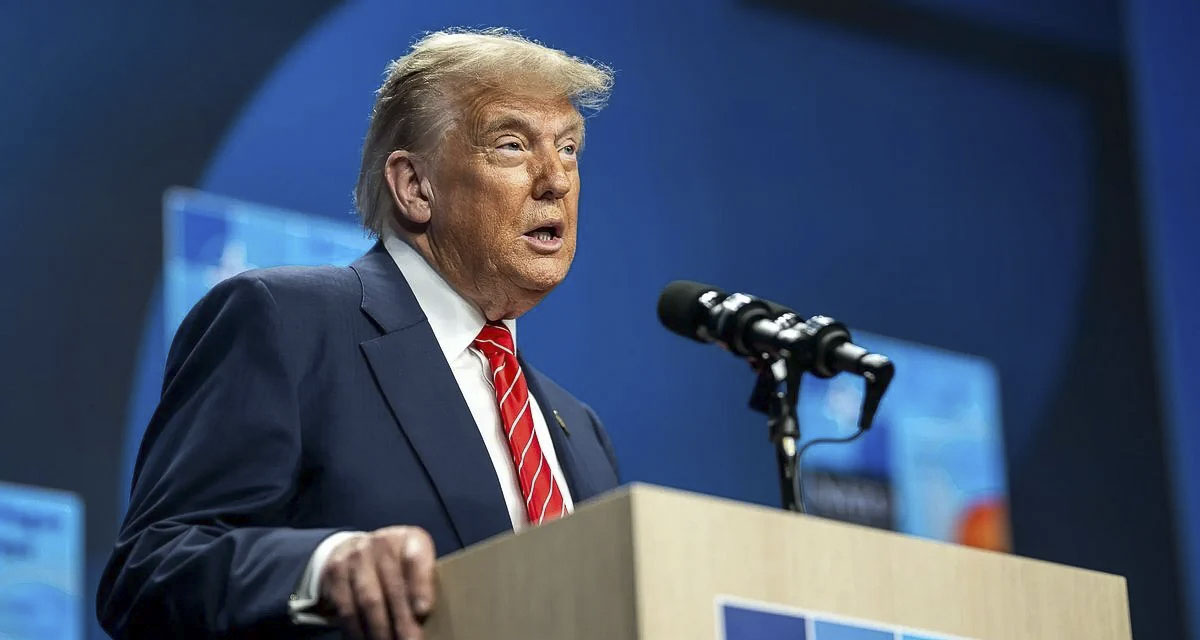
The White House proposes a dramatic increase in defense spending in fiscal 2027 while significantly reducing spending in other departments, according to its budget submission released Friday.
The request comes as U.S. lawmakers still haven’t finished funding all federal agencies for the current fiscal year and are currently locked in a shutdown of the unfunded Department of Homeland Security.
The 92-page budget proposal includes nearly $2.2 trillion in overall requested spending, with about $1.8 trillion of that to be implemented via the 12 appropriations bills. President Donald Trump’s request for $350 billion in supplemental funding for defense spending makes up the rest of the total cost.
That’s despite the discretionary spending in the budget proposal overwhelmingly consisting of Department of Defense funding, about $1.1 trillion, roughly $251 billion from fiscal year 2026.
By contrast, nondefense discretionary spending is cut by $73 billion, a 10% reduction.
Agencies and programs facing the most drastic potential cuts include the Environmental Protection Agency, which under the proposal would receive $4.2 billion, a 52% cut.
Under the proposal, State and International programs receive $35.6 billion, a 30% reduction, while the Department of Labor gets just under $10 billion, a roughly 26% cut from the fiscal year 2026 enacted baseline.
NASA gets $18.8 billion, a 23% reduction, and the U.S. Department of Agriculture gets just under $21 billion, 19% less than last year.
Health and Human Services receives 12.5% less than last year – $111 billion – while Housing and Urban Development receives $73.5 billion, or 13% less than last year. The departments of Energy and Commerce also see respective cuts of roughly 12%.
Though the Education Department sees only a 2.9% reduction, the White House added in the document that it plans to continue the department’s “path to elimination.”
The Trump administration wants to increase funding for Veterans Affairs to $145 billion and funding for the Department of Justice by $41 billion.
Proposed funding for the Department of Homeland Security – which lawmakers still haven’t funded for fiscal year 2026 – would essentially stay the same in fiscal year 2027 at $63 billion.
Though lawmakers use the president’s budget request as a general starting point for appropriations negotiations, they almost always make significant changes.
Democrats are particularly against the proposed funding cuts and the defense funding boost that the administration is requesting.
“The vision President Trump has outlined for America in his budget is bleak and unacceptable,” U.S. Sen. Patty Murray, D-Wash., vice chair of the Senate Appropriations Committee, stated Friday. “President Trump wants to slash medical research to fund costly foreign wars. It doesn’t get more backward than that, and the only responsible thing to do with a budget this morally bankrupt is to toss it in the trash.”
Before congressional committees can even start marking up appropriations bills, the House still has to pass the Senate’s hybrid FY26 Homeland Security bill, which excludes annual ICE and CBP funding.
Republicans also have to craft and pass through both chambers a filibuster-proof budget reconciliation bill to force through the missing ICE and CBP funding.
Budget reconciliation will be further complicated by Republican lawmakers who want to use it as a vehicle to pass other legislation that Democrats are blocking in the Senate, particularly the SAVE America Act, which likely runs afoul of the chamber’s Byrd Rule.
Trump wants lawmakers to finish funding DHS by June 1, which marks eight months into fiscal year 2026. Congress then faces an Oct. 1 deadline to pass all fiscal year 2027 appropriations bills.
Given Congress’ dismal track record of funding the government on time, it likely will attempt to pass a Continuing Resolution to temporarily extend funding levels for any departments and agencies they haven’t funded. Otherwise, Congress faces yet another government shutdown.
This report was first published by The Center Square.

- Camas School District Legislative Advocacy Committee to host Candidate Forum
 Six candidates from two federal and state districts will answer education questions at Discovery High School on Oct. 5.
 - Opinion: Why lawmakers are going after your pension
 Ryan Frost argues lawmakers included public pensions in the income tax law in preparation for lowering the $1 million deduction.
 - Opinion: Washington has an income tax – why won’t the media call it one?
 Cargill argues the media is using supporters’ preferred label “millionaires tax” instead of the legally accurate term “income tax.”
 - POLL: How do you think higher impact fees for school districts affect housing affordability in Clark County?
 Clark County Council raised impact fees for La Center, Hockinson, and Woodland school districts, drawing pushback from the Building Industry Association.
 - WA high court tosses natural gas measure approved by voters
 The WA Supreme Court struck down I-2066 in a 6-3 ruling, finding it covered four distinct subjects in violation of the single-subject rule.