Five Supreme Court seats are on the November ballot — the first real chance in a generation to put constitutionalists on the bench before the next voter-approved initiative is thrown out.
On Sept. 17, six justices of the Washington Supreme Court threw out Initiative 2066. Nearly two million Washingtonians had voted it into law. Clark County was not confused about what that vote meant. Families here wanted to keep the right to heat with natural gas, cook with it, and run a business on it without Olympia and the cities slowly regulating that choice out of existence.
I stand with the Building Industry Association of Washington and the Washington Policy Center. BIAW's Greg Lane called the ruling a direct rejection of the clearly expressed will of Washington voters and government telling the people their opinion does not matter. Todd Myers at the Policy Center said the majority found a small technical reason to overrule the people because they seem to think they know better. Both are right. Three justices — Salvador Mungia, Charles Johnson, and Sheryl Gordon McCloud — would have cut a few defective sections and left the voters' core decision standing. The majority refused and erased the entire law. That is ideology over democracy.
This is a kitchen-table bill in Clark County
Statewide, the Energy Information Administration counted 1,287,447 residential natural-gas customers in 2024, plus more than 109,000 commercial accounts. More than one-third of Washington households use gas as their primary heat. In Clark County the pipe is not theoretical. Northwest Natural serves on the order of 78,000 Washington households in this market. Those are Camas, Vancouver, Battle Ground, Ridgefield, and Washougal kitchens, shops, and restaurants. Clark Public Utilities still relies on the River Road natural-gas plant as a backbone of local electric reliability. When state policy squeezes gas out of buildings and off the system, the cost does not stay in Seattle. It shows up here in Clark County.
The Court's opinion does not rip a furnace out tomorrow morning. It clears the field so codes, utilities, and local rules can again prohibit, penalize, and discourage gas. BIAW has put the all-electric conversion of an existing gas home at about $40,000 when you stack the furnace, water heater, range, panel, and wiring. 2026 contractor guides in our region put whole-home electrification at roughly $18,000 to $38,000 before rebates, with a ducted heat pump alone commonly $12,000 to $18,000. Rebates do not make a coerced conversion free. They do not help every household. And they do not change the insult: Clark County homeowners are being lined up to write five-figure checks for a policy they just voted down.
A working family in Fern Prairie or Fisher's Landing cannot absorb a $20,000 to $40,000 retrofit because six justices preferred a climate program to a completed election. Restaurants that cook on gas, small shops that heat with it, and seniors on fixed incomes will feel this first. That is the local meaning of a single subject.
Five seats. One election. The first real opening in a very long time.
Washingtonians elect Supreme Court justices. That power has been diluted for years because vacancies are filled by the governor, and appointees then run as incumbents. A majority of the current Court first arrived that way. Governor Ferguson seated two more this cycle. Appointment is how an ideological court is built between elections.
This November is different. For the first time in a very long time, five of the nine seats are on the ballot at once — Positions 1, 3, 4, 5, and 7. Two are open because justices are leaving. Two are special elections for brand-new gubernatorial appointees. One is the chief justice who wrote the I-2066 majority. Voters can change the direction of the Court in a single night. If we sleep through these races the way Washington usually sleeps through judicial elections, the next initiative on taxes, crime, energy, or schools will meet the same six-vote wall.
The races are nonpartisan on the ballot. The stakes are not. We need justices who will apply the Constitution as written, give a lawful initiative the presumption of validity, and refuse to legislate from the bench. Candidates who have made that case this cycle include Dave Larson for Position 5, Judge Sean O'Donnell for Position 4, Scott Edwards for Position 1, and Judge David Stevens for Position 3. Larson is a longtime Federal Way municipal judge running to restore a Court with no ideological score to settle. O'Donnell is a King County superior court judge seeking the open seat of retiring Justice Charles Johnson. Edwards is the challenger to Ferguson appointee Colleen Melody. Stevens, elected in Mason County after defeating an Inslee appointee, is in the open race for Position 3. Position 7 is the seat of Chief Justice Debra Stephens, author of the I-2066 majority; voters should study that race with the same seriousness.
I am not asking anyone to take a judge's campaign slogan on faith. Read the voter pamphlet. Look at who defers to the people's reserved power in Article II and who treats that power as an inconvenience. Then vote as if the next initiative you care about will land in front of these nine people — because it will.
Get out and vote like the Court is on the ballot. It is.
I-2066 is over as a statute. It is not over as a warning. A Court that will void 1.9 million votes on a flexible rational-unity theory will void the next close initiative the same way. The lawful answer is not another lawsuit the same Court will hear. The lawful answer is November 3.
Clark County residents should treat this judicial slate as seriously as any legislative race. Return the ballot. Talk to neighbors who still think Supreme Court elections are uncontested paperwork. Support candidates who will be constitutionalists on the bench — including Dave Larson, Sean O'Donnell, Scott Edwards, and David Stevens — and hold every other name on that page to the same test: will you sustain a lawful vote of the people, or will you find a theory to cancel it?
Energy choice is on the line in Camas and Vancouver. So is whether the people still make the law in this state. Five seats. One election. Use it.
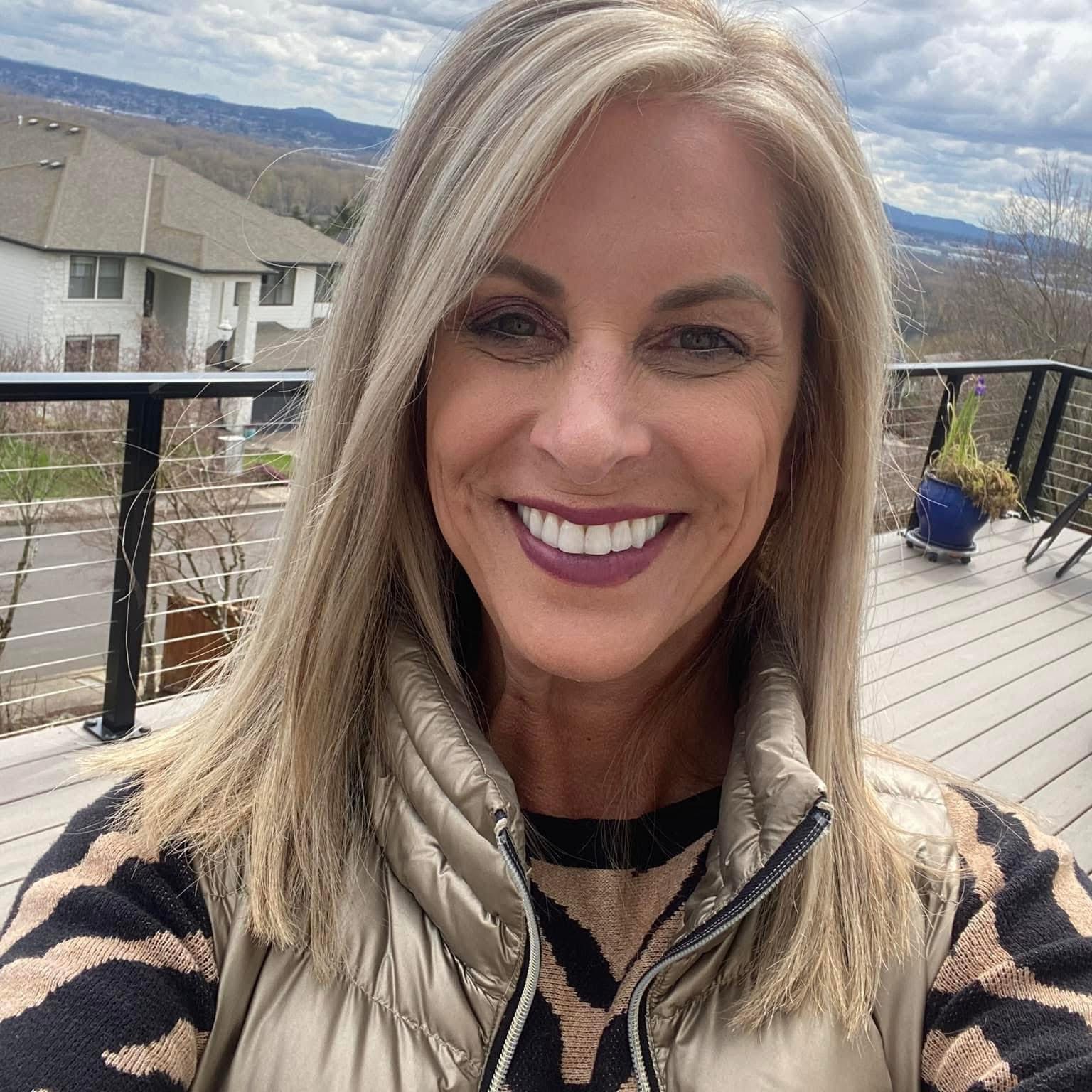
Leslie Lewallen is a former Camas City Council member, former King County deputy prosecutor, former Judicial Law Clerk for The Washington State Supreme Court and director of Clark County Future 42. She lives in Camas with her family.