

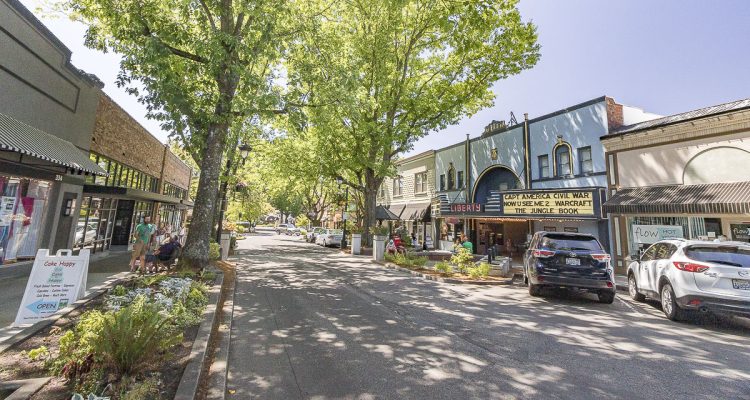
Camas City Council Member Leslie Lewallen believes her city deserves more help from regional partners to address the perceived ‘housing gaps’ Camas and other cities have
Ken Vance, editor
Clark County Today
The city of Camas was in the news recently when members of the Camas City Council voted (Aug. 18) to ban camping in public areas and public sidewalks, a move that became an option in 2024 after a Supreme Court ruling.

The Supreme Court overturned a lower court’s decision that said that ordinances against camping criminalized homelessness. For years, a city could not ask the homeless to move on or stop camping in public spaces unless the city had a place for them to live — a shelter, for example. In 2024, in Grants Pass vs. Johnson, the Supreme Court ruled that camping bans on public property regulated conduct, not the status of the individual who was camping. That has opened the door for cities across the country to enact bans or strengthen law already on the books. By some accounts, more than 200 cities, including Camas, have done just that.

Camas Council Member Leslie Lewallen reached out to me this week to share a reaction that she had to the news coverage of the decision, specifically addressing an element of the story that she believes has been overlooked.
“I read a few articles and comments noting that Camas doesn’t have any shelter beds,’’ said Lewallen, speaking to me on her own behalf and not in representation of the Camas City Council. “We do have organizations in Camas that assist and allow folks to stay overnight, and there was discussion about creating tiny home shelters a few years back, but there’s an angle no one has talked about.
“Camas pays significant fees (taxpayer dollars) towards the SW regional ECHO (Ending Community Homeless Organization) program to help address the perceived ‘housing gaps’ Camas and other cities have,’’ she added. “However, blindly paying into that program without any accountable regional performance metrics is, as you can imagine, buying failure with an expensive price tag.’’
Lewallen believes that cities such as Camas are actually thought leaders in getting nearer to the right solution for homelessness. She makes a compelling case.
“Local cities adopt and enforce strict homelessness laws,’’ she said. “Those force the homeless into regionally run and funded programs to help exit them from homelessness. That’s the most effective way to leverage tax dollars rather than each city building homeless programs themselves.
“Camas is doing its end of the bargain,’’ she said. “Our regional partners are not. They take our money but do little to make any meaningful difference. The real story isn’t Camas. It’s ECHO and it’s abject failure in doing anything to make a difference.’’
Camas ordinance No. 25-015
The recently passed ordinance in Camas amends the city’s municipal code relating to unlawful camping and storage of personal property on public property. The ordinance notes that public property “is intended to be used by the public for public purposes,” including recreational use, pedestrian, bicycle, and other public uses. Camping without adequate sanitation services presents a public health and safety concern. Enacting this ordinance would allow the city greater ability to address unauthorized encampments or obstructions on city streets, sidewalks, parks, and other public property.

- Opinion: Why lawmakers are going after your pension
 Ryan Frost argues lawmakers included public pensions in the income tax law in preparation for lowering the $1 million deduction.
 - Opinion: Washington has an income tax – why won’t the media call it one?
 Cargill argues the media is using supporters’ preferred label “millionaires tax” instead of the legally accurate term “income tax.”
 - POLL: How do you think higher impact fees for school districts affect housing affordability in Clark County?
 Clark County Council raised impact fees for La Center, Hockinson, and Woodland school districts, drawing pushback from the Building Industry Association.
 - Opinion: Impaired walking vs. impaired driving; pick neither
 Doug Dahl argues impaired driving remains deadlier than walking impaired when measured by exposure time, not miles traveled.
 - Opinion: When the same money helps fund the program and the story
 Peter Bracchi examines how the Ed and Dollie Lynch Fund supports Vancouver’s HART program, the Bridge Shelter, and Community Funded Journalism covering the same policy arena.