
Editor’s note: Opinions expressed in this letter to the editor are those of the author alone and may not reflect the editorial position of ClarkCountyToday.com
For years, Vancouver residents have been told that homelessness requires a special system.
Not normal enforcement. Not normal consequences. Not normal public-health standards. Not normal expectations for sidewalks, parks, businesses or neighborhoods.
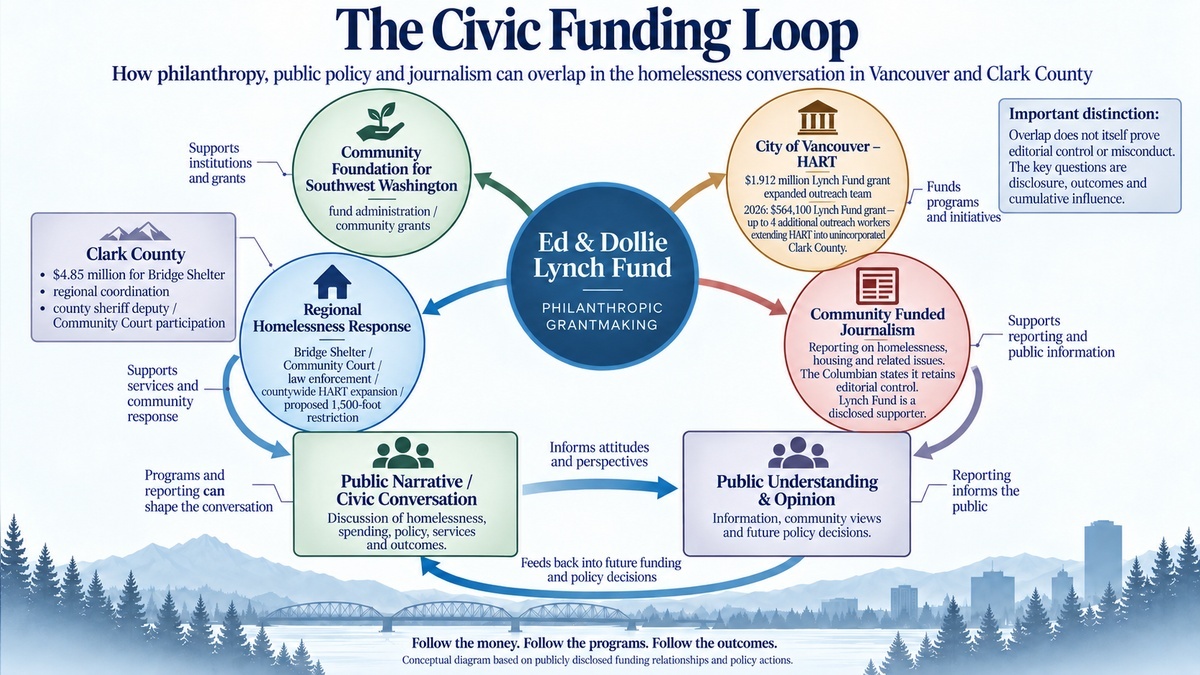
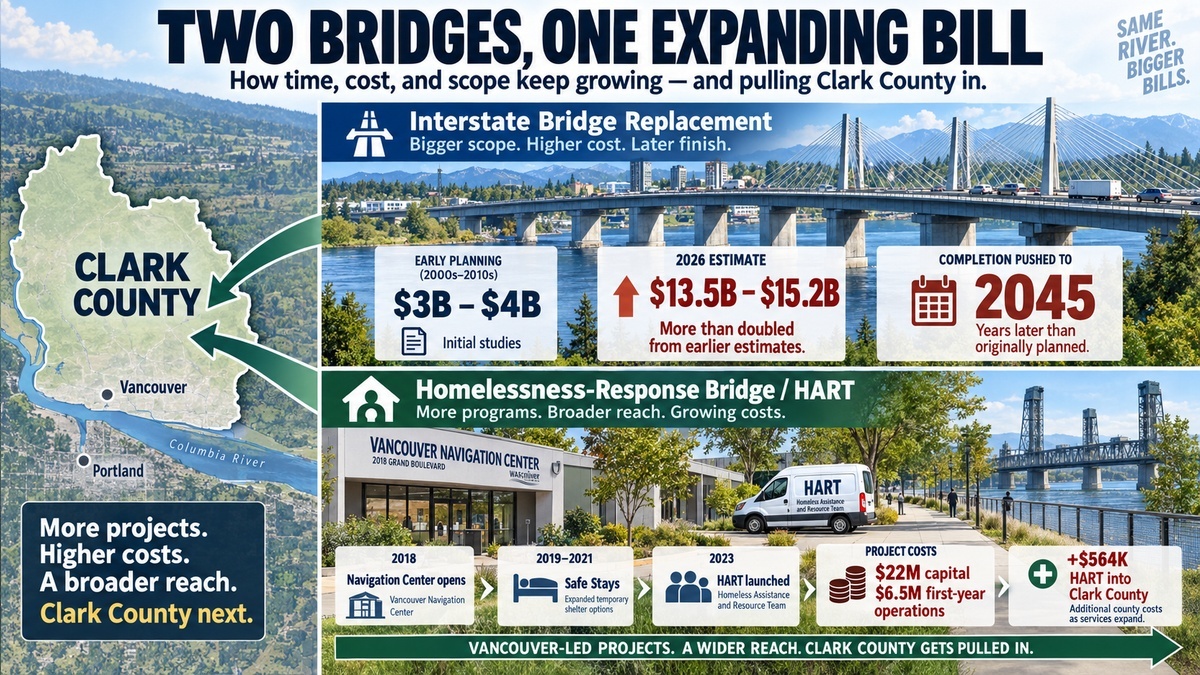
Instead, we now have the Homeless Assistance and Resource Team (HART) – outreach teams, crisis response meetings, nonprofit partners, Community Court, cleanup crews, grant-funded positions, limited-term staff, service referrals, coordination meetings, public messaging, and endless explanations about why the city’s hands are tied.
After more than a decade of street disorder, the question is no longer whether the system has compassion.
The question is whether the system has become ridiculous.
So here is a satire test.
Imagine a new group appears in Vancouver calling itself the “Sidewalk Freedom Fellowship.” Its members announce they do not believe in rent, work schedules, business licenses, public-health rules, theft laws, drug laws, park rules, sanitation rules or sidewalk access requirements.
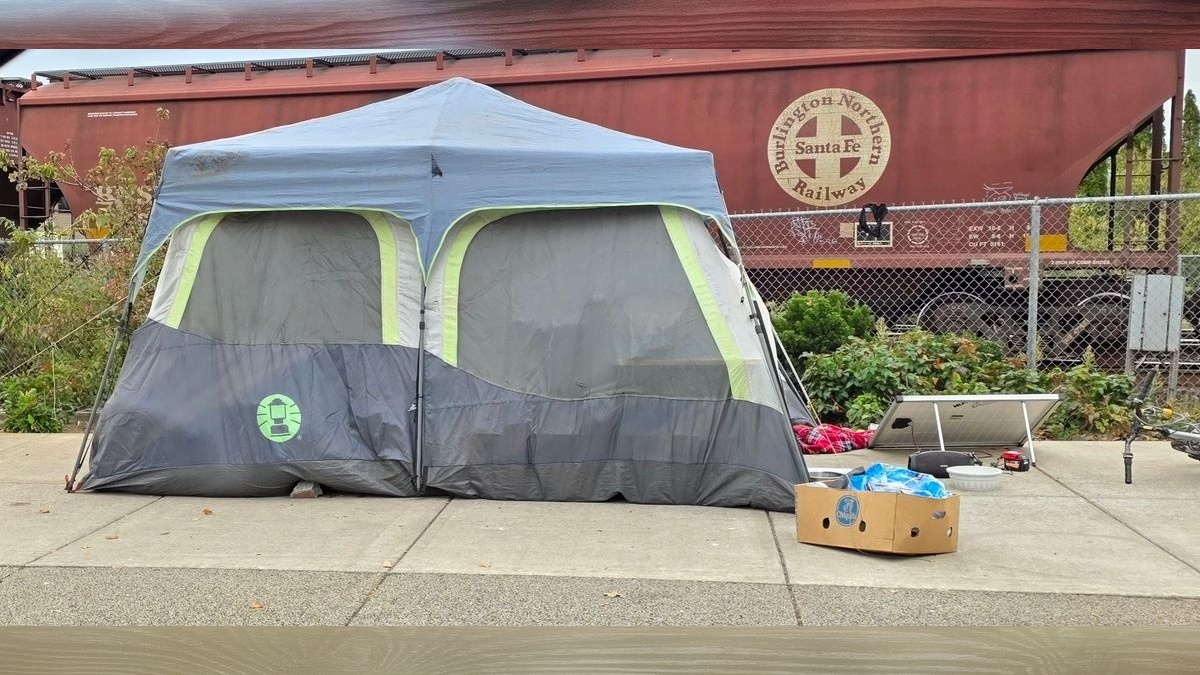
They gather outside businesses. They block public walkways. They leave trash, food waste and human waste behind. They steal small items because they say society has failed them. They start fires. They use drugs in public. They overwhelm police, fire, cleanup crews, emergency medical services and nearby neighborhoods.
Now imagine the city’s response.
Would Vancouver enforce the law?
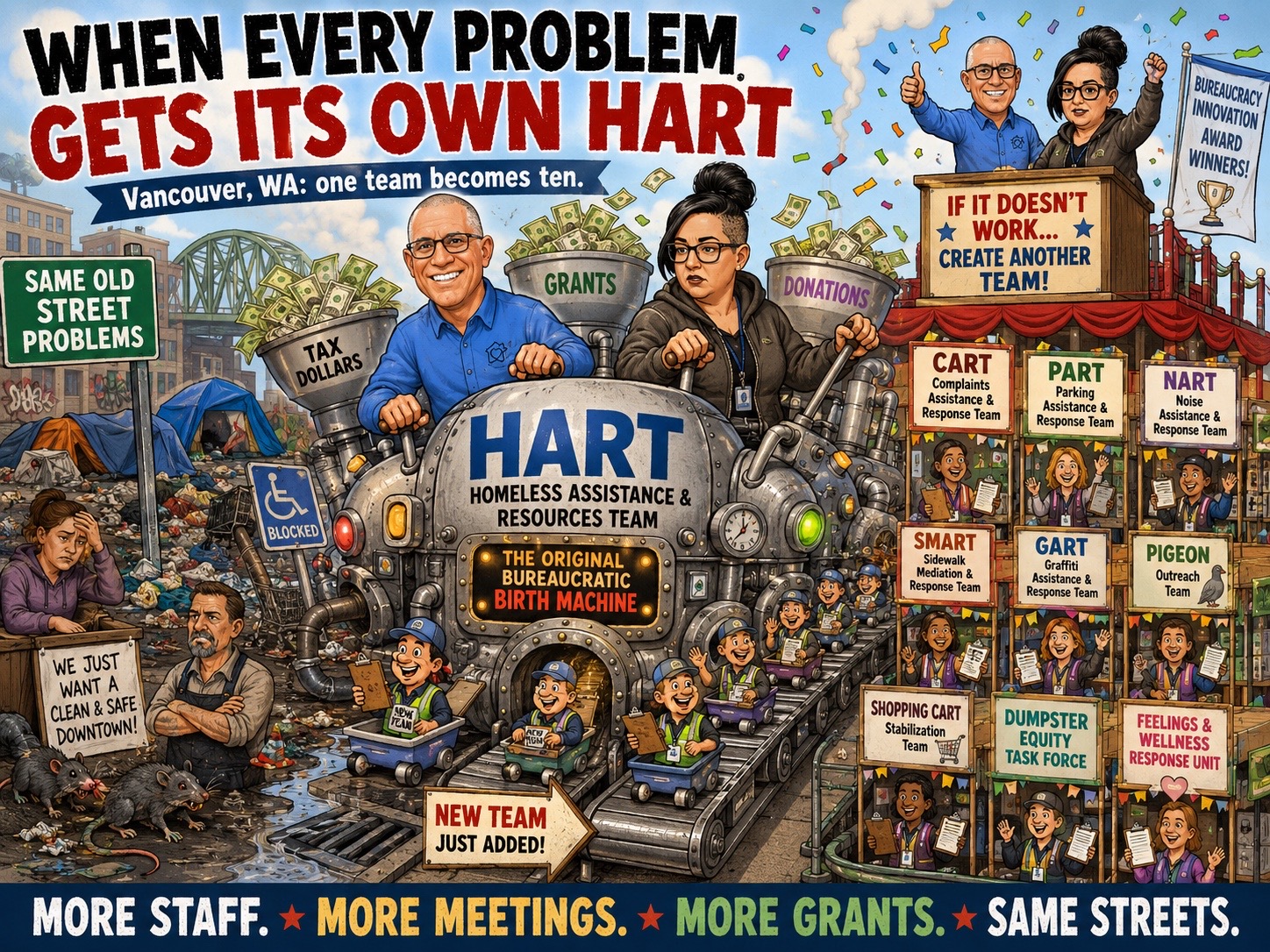
Or would it create a brand-new “Sidewalk Assistance and Resources Team”?
Would the city say these are really “quality-of-life behaviors” that need understanding, not consequences? Would it create a special court where charges disappear if participants attend meetings? Would it accept grants to hire more coordinators? Would nonprofits receive contracts? Would public employees hold community forums explaining that enforcement is complicated? Would taxpayers be asked for more money every year while the same group keeps creating the same problems?
That sounds absurd.
But how different is it from what Vancouver has built around homelessness?
HART may have started with good intentions. But good intentions do not excuse a parallel system that appears to move people away from normal accountability while the public absorbs the consequences. Residents see the same cycle over and over: complaints, outreach, cleanup, relocation, more complaints, more outreach, more cleanup, more funding.
The city calls it a response system.
Many residents experience it as managed disorder.
This is not about lacking compassion for people who are truly poor, mentally ill, addicted or living outside. A decent community should help people in crisis. But help must come with boundaries. Treatment must come with expectations. Shelter must come with standards. Public spaces must remain public. Sidewalks must remain usable. Food service must be sanitary. Parks must be safe. Businesses should not be forced to operate inside a permanent experiment in non-enforcement.
Vancouver’s homelessness response has become its own machine. The machine needs staff. The staff need grants. The grants need programs. The programs need nonprofits. The nonprofits need contracts. The contracts need reports. The reports show activity. The activity justifies more money.
But activity is not the same as success.
If the street-level result is still garbage, human waste, theft, drug activity, blocked sidewalks, public-health complaints, fires, camps, cleanup costs and exhausted neighborhoods, then residents have every right to ask whether HART is solving the problem or protecting the system that manages it.
Community Court raises the same concern. For ordinary citizens, laws are laws. But for certain repeat public-disorder behavior, Vancouver has created a softer route built around services, appearances, referrals and eventual dismissal. That may sound compassionate in a conference room. On the street, it can look like a taxpayer-funded bypass around consequences.
What is the message to the public?
Follow the rules, pay taxes, fund the programs, tolerate the damage and be patient.
What is the message to the disorder?
There is always another outreach visit, another service referral, another cleanup, another court alternative, another grant, another explanation and another chance.
At some point, compassion without accountability becomes permission.
That is why Vancouver needs a full public review of HART, Community Court and the entire homelessness response structure. Not another presentation celebrating contacts, referrals, cleanups and partnerships. A real review.
How many people contacted by HART leave homelessness permanently? How many return to camps? How many are repeat cases? How much does each successful outcome cost? How many businesses and neighborhoods are repeatedly impacted? How many public-health complaints remain unresolved? How many cleanup sites return? How often are laws enforced compared with redirected?
Most importantly, who is accountable when the system fails?
Vancouver should help people who want help. It should provide shelter, treatment, food and a path back into stability. But it should stop pretending that lawlessness becomes compassion when government gives it a program name.
If any other group created the same level of disorder, residents would demand enforcement.
Homelessness should not be a permanent exemption from public order.
HART may have been created as a solution. After years of expansion, money and continued chaos, Vancouver should ask a harder question:
Has HART become part of the problem?
Peter Bracchi
Vancouver