
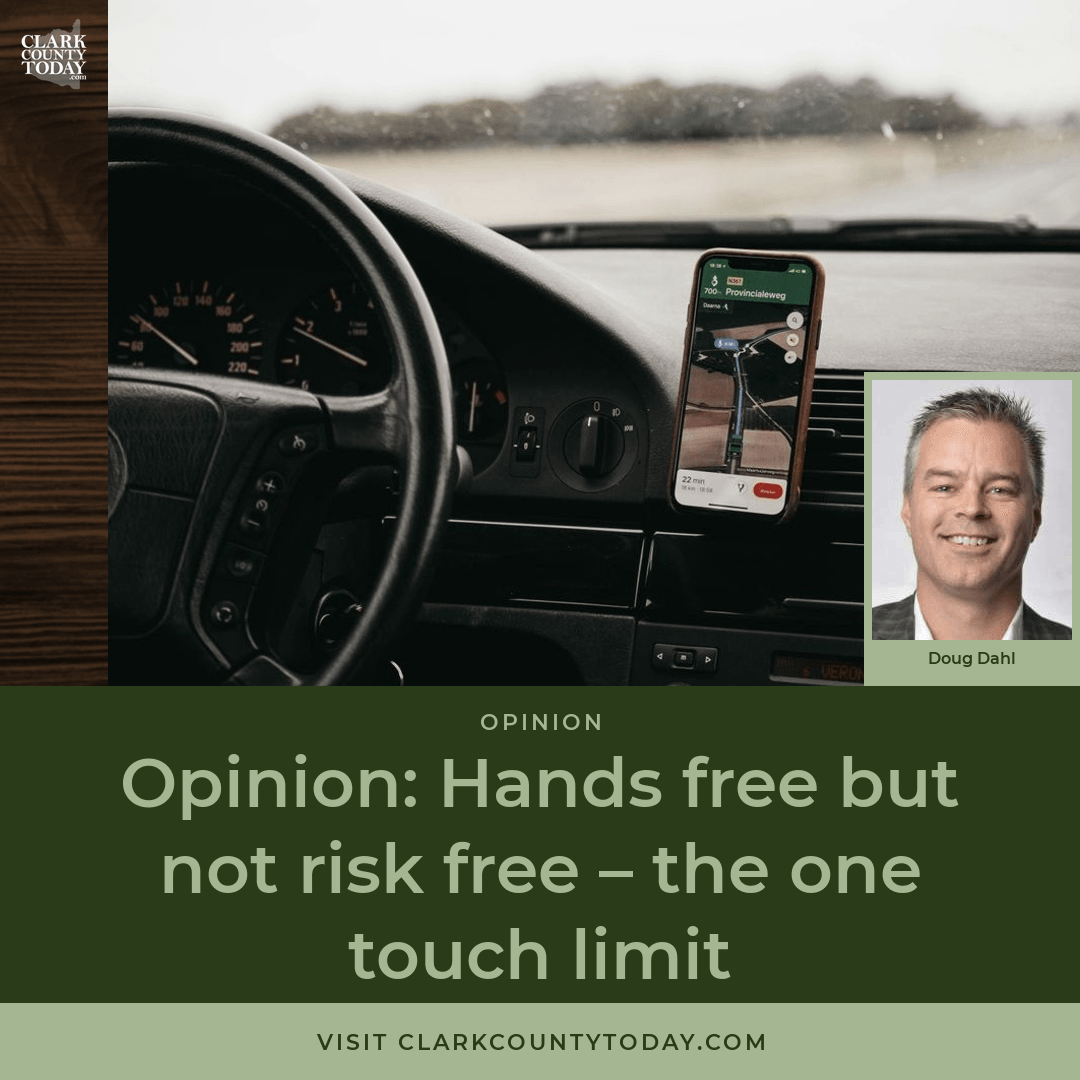
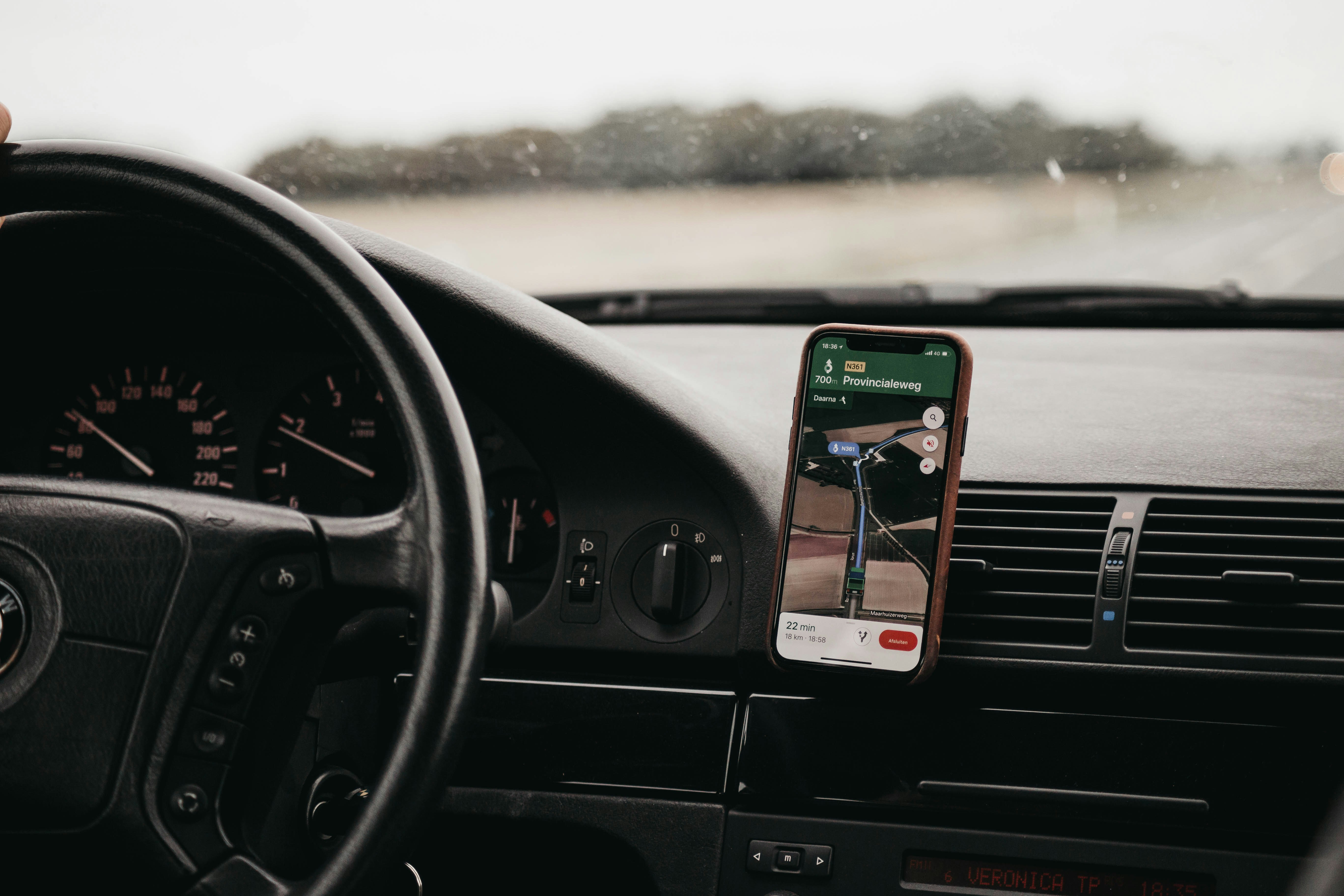
Q: As long as I’m using my phone hands-free, I understand the law allows touching the screen to do some functions on the phone. But how much touching is allowed?

Doug Dahl
A: Before we get into what you can do, allow me to share a phrase I used to tell my kids: Just because you can doesn’t mean you should. Traffic laws set the bare minimum standard for a driver. If you follow all traffic laws, that doesn’t make you a great driver, it just makes you a legal one.
The law permits you to answer a call (hands-free, of course) while driving, but crash data show that it’s not just holding a phone that’s a distraction; it’s where your mind goes while driving that’s the main problem. Driving is cognitively demanding and drivers who talk on a phone, whether hand held or hands-free, miss more visual information, struggle to stay in their lane, and have slower response times. All that adds up to four times the crash risk compared to a focused driver. If you’re hoping the law permits enough touches to make a call, it doesn’t, but you shouldn’t be calling people while you drive anyway.
The best practice is putting your phone away while driving, but I realize that for many people the phone has replaced the radio as a music player. Even the cognitive load of listening to the radio increases driving errors, more for talk radio than music. But it’s still less than half the risk of interacting with a phone.
The law allows a driver “the minimal use of a finger to activate, deactivate, or initiate a function of the device.” As someone who believes kindness is an important part of driving, I think there are a few drivers who could benefit from applying the “minimal use of the finger” principle to all their driving.
But getting back to the question, how much is “minimal”? The Washington State Patrol, the Washington Traffic Safety Commission, and Washington’s Target Zero plan all describe it as a single touch (or swipe). That’s about as minimal as you can get.
The law is kind of restricting interaction with your phone at a level similar to what you might do with a car radio (the old kind that didn’t have a touch screen and dropdown menus full of distracting options). You could turn it on or off, adjust the volume, and change your station. If you limit your phone use to starting or stopping your music player, you’re minimizing your risk and following the law.
In Washington’s most recent distracted driving observation survey just over five percent of drivers were distracted. The phone provided the distraction for a bit less than half of those drivers. The rest of the drivers were involved in other distractions like eating, grooming, reading, and probably a few dealing with kids in the back seat (although the report doesn’t say that, but you know it’s true).
At any given moment, about five percent of drivers are distracted, but over 20 percent of traffic fatalities in Washington involve a distracted driver. And that number is most certainly underreported. When a crash involves speed or impairment, there’s evidence, like the severity of the impact (speed) and a breath or blood test (impairment). Unless a driver admits distraction, it’s sometimes difficult to know if it was a crash factor.
Not all phone touches are equal, safety-wise. Although both are legal, using one touch to answer a phone call diverts your attention from driving much more than hitting play on your music app. Choose wisely.


Comments
Loading comments…