



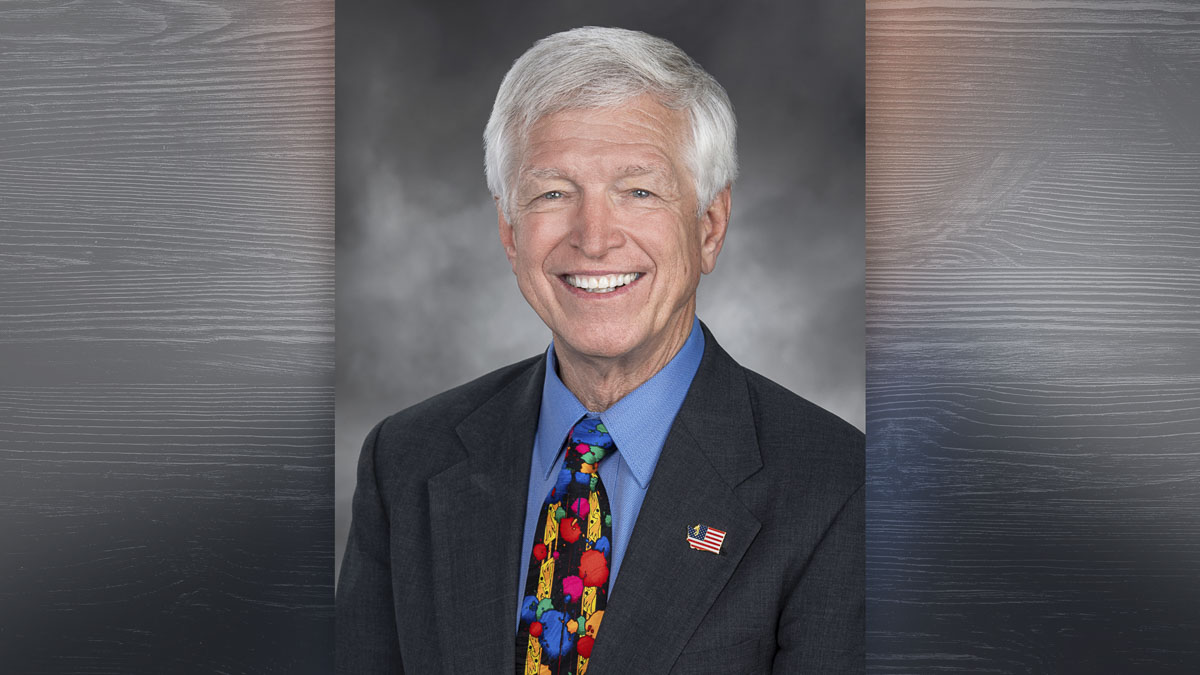
If enacted, the policy will help manage construction costs, strengthen supply chain stability, and ease compliance challenges for Washington manufacturers and suppliers, particularly small and mid-sized businesses
The Washington State House of Representatives has passed legislation sponsored by Rep. John Ley to update state regulations governing the use of naturally occurring fibrous silicate materials in construction, a move to support business, infrastructure development, and housing projects across the state.
House Bill 2605 addresses naturally occurring fibrous silicate materials that may be present in widely used construction products, including commercial aggregates, asphalt, and concrete. These materials are essential components in building roads, homes, and public works throughout Washington.
“State asbestos laws were originally designed to prevent the intentional inclusion of asbestos in building materials, which remains an important safeguard,” said Ley, R-Vancouver. “However, those laws were not intended to restrict the use of materials that contain only minute, naturally occurring trace amounts that are low risk and cannot be fully removed.”
Under existing law, construction materials containing even trace levels of naturally occurring asbestos may be subject to extensive labeling, inspection, and use requirements. HB 2605 would exempt commercial aggregates, asphalt, and concrete containing 0.25 percent or less of naturally occurring fibrous silicate material from being classified as asbestos-containing building materials under state law.
“This policy would help lower the cost of constructing homes, apartments, roads, and sidewalks,” said Ley. “It would also support environmental goals by making it more feasible to use locally sourced aggregates rather than transporting materials from farther away, including other states.”
The legislation would not permit the intentional addition of asbestos nor weaken workplace safety standards overseen by the Department of Labor and Industries. Instead, it would establish clear and consistent definitions that distinguish hazardous asbestos products from low-risk, essential construction materials.
“This is a practical, balanced approach,” said Ley. “We can continue to protect workers and the public while reducing unnecessary regulatory hurdles that slow down critical infrastructure and construction projects.”
If enacted, the policy will help manage construction costs, strengthen supply chain stability, and ease compliance challenges for Washington manufacturers and suppliers, particularly small and mid-sized businesses.
“Aggregates and concrete are fundamental to nearly every project, including roads, bridges, homes, and schools,” Ley added. “This legislation would ensure those projects can move forward efficiently while maintaining strong health and safety protocols.”
HB 2605 now moves to the Senate for further consideration.
Information provided by the Washington State House Republicans, houserepublicans.wa.gov

Also read:
- White House govt. Funding request for 2027 cuts $73 billion
 President Trump’s budget seeks to boost defense funding while cutting $73 billion from agencies like the EPA, NASA, and Agriculture, prompting sharp criticism from Democratic leaders.
 - Heywood asks WA Supreme Court to allow referendum effort on income tax
 Brian Heywood is petitioning the state Supreme Court after the Secretary of State rejected a referendum to repeal Washington’s new 9.9% tax on income over $1 million.
 - VIDEO: Families at center of WA transgender sports debate face-to-face with OSPI
 Two Washington high school students and their parents met with Superintendent Chris Reykdal to discuss concerns about sports policies after one student faced an investigation for harassment.
 - As Washington lawmakers punt on school cellphone ban, some want more action
 At Robert Eagle Staff Middle School, all-day phone removal led to fewer conflicts and more student engagement, but some parents and lawmakers argue a ban should not be imposed statewide.
 - POLL: Do you agree with giving a state commission the power to remove an elected sheriff?
 A new poll asks if a state commission—not voters—should have the power to remove an elected sheriff, following concerns raised by Clark County Sheriff John Horch.
